
Floating Docks in Ontario: A Guide for Rideau Lakes and Eastern Ontario Cottage Owners
If you own a cottage or year round home on the water, your dock is a big part of how you enjoy your property. It is where you tie up the boat, sit with a coffee in the morning, and watch the sun go down at night. On lakes and rivers across Ontario, floating docks have become a popular choice because they adapt to changing water levels and can be tailored to almost any shoreline.
For owners on Rideau Lakes, the Rideau Canal system, and nearby Eastern Ontario waterways, choosing the right floating dock is about more than looks. It is about stability, durability, and having a dock system that can handle Canadian conditions. The right design combines smart materials, the right layout, and local expertise.
Why Floating Docks Work So Well in Ontario
Ontario’s lakes and rivers rarely stay the same height from month to month. Spring runoff, summer drought, boat traffic, and wind can all affect water levels. Floating docks are designed to ride with those changes instead of fighting them.
Floating docks are recommended for deep water, depth changes, depths over six feet, or unstable bottoms. They stay at a consistent height above the water and can be paired with gangways and ramps in different sizes to suit the shoreline. You can see more about how these systems work on the Floating Docks page.
Key advantages for Ontario properties:
- Ideal for deep or fluctuating water
Floating docks are a smart option when there is significant depth off the end of the shoreline, a steep drop, or a soft lake bottom that does not hold poles well.
- Comfortable to use when levels change
Because the dock floats, the step from shore or a gangway onto the dock stays predictable as water levels rise and fall.
- Engineered floats for Canadian conditions
Quality floating dock systems use floats manufactured from durable polyethylene resin, filled with expanded polystyrene, with UV protection to help resist fading. Long term warranties on the floats add extra peace of mind.
When users search for floating docks Ontario or floating docks Canada, they are usually looking for this kind of flexible, low maintenance system that works with the water instead of against it.
Floating Docks for Rideau Lakes and the Rideau Canal System
Owning a property on the Rideau Lakes or along the Rideau Canal means living on one of Canada’s most unique waterways. Seasonal water level management, steady boating traffic, and clear guidelines around shoreline work all play a role in how a dock should be designed.
For many Rideau docks, floating systems are an excellent fit because:
- Water depth and bottom conditions vary from bay to bay
Some shorelines drop off quickly, others are shallow for a long distance. Floating dock systems can be configured with different widths, sections, and gangways to match each specific site.
- Boat traffic, wake, and ice movement are part of life
Big Rideau Lake, Newboro Lake, and other parts of the system see a mix of local and visiting boats. The right dock width, layout, and float configuration improves stability in all that movement.
- Permits and guidelines matter
Parks Canada and local conservation authorities set expectations for docks and shoreline work, focusing on low impact design and protection of the natural shoreline.
A local dock company that knows Rideau Lakes and Eastern Ontario can recommend floating dock options that respect these conditions and still feel like a natural extension of your property.
How to Choose the Right Floating Dock in Ontario
Searching online for boat docks near me is a good starting point, but the best dock for your property depends on the details of your shoreline and how you use the water.
1. Understand your shoreline and lake bottom
Begin with a clear look at:
- How quickly the water gets deep off shore
- Whether the bottom is rock, sand, silt, or a mix
- How much boat traffic, wake, and wind exposure the area gets
Floating docks are especially effective in
deep water, where depths change seasonally, or where the bottom is too soft or uneven to support a traditional pole dock.
2. Choose a stable, comfortable layout
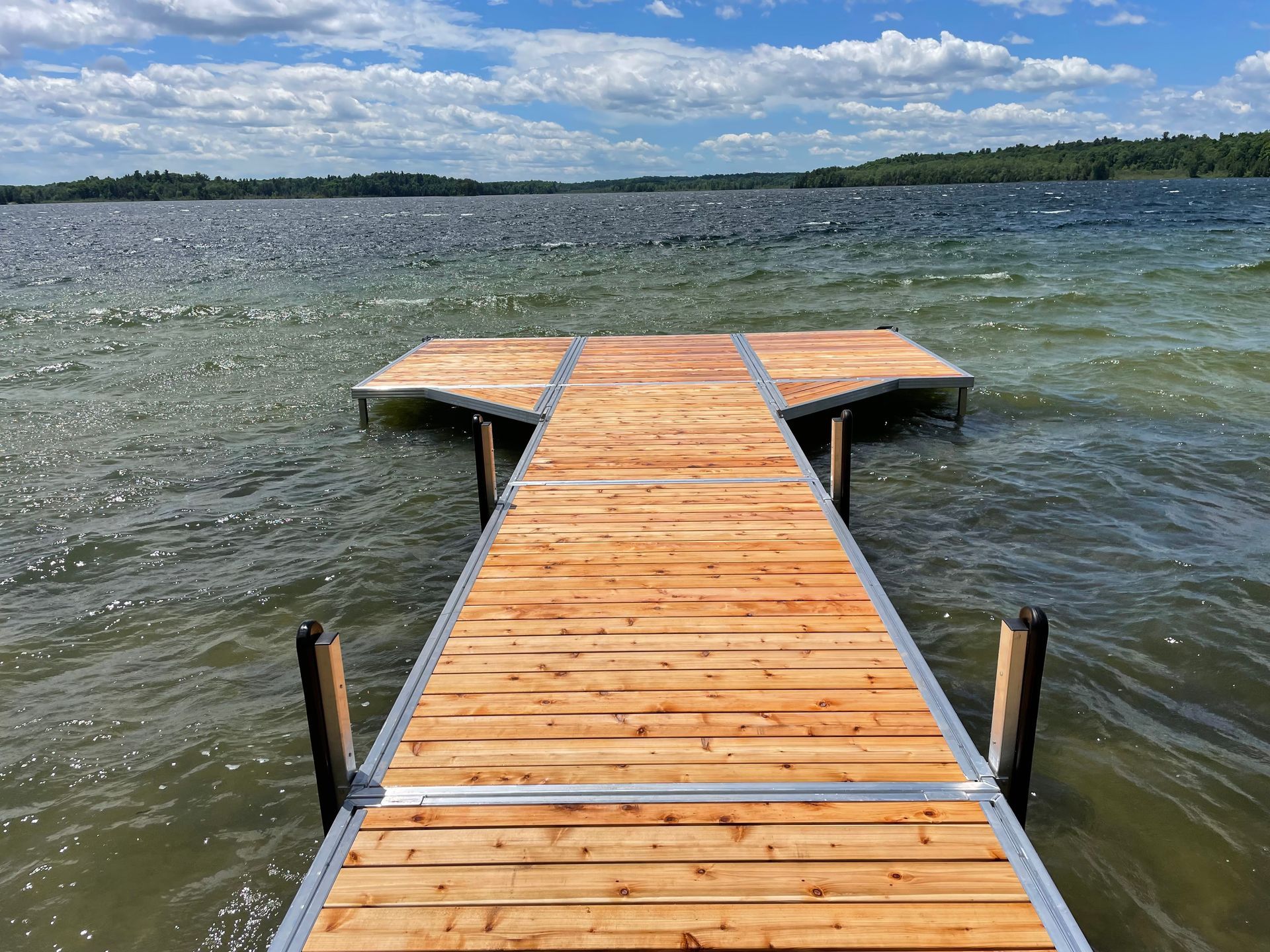
A minimum width of six feet gives a more stable and comfortable feel as you walk along the dock. Wider sections also create more usable space for seating, ladders, cleats, and accessories.
From there, layout options can include:
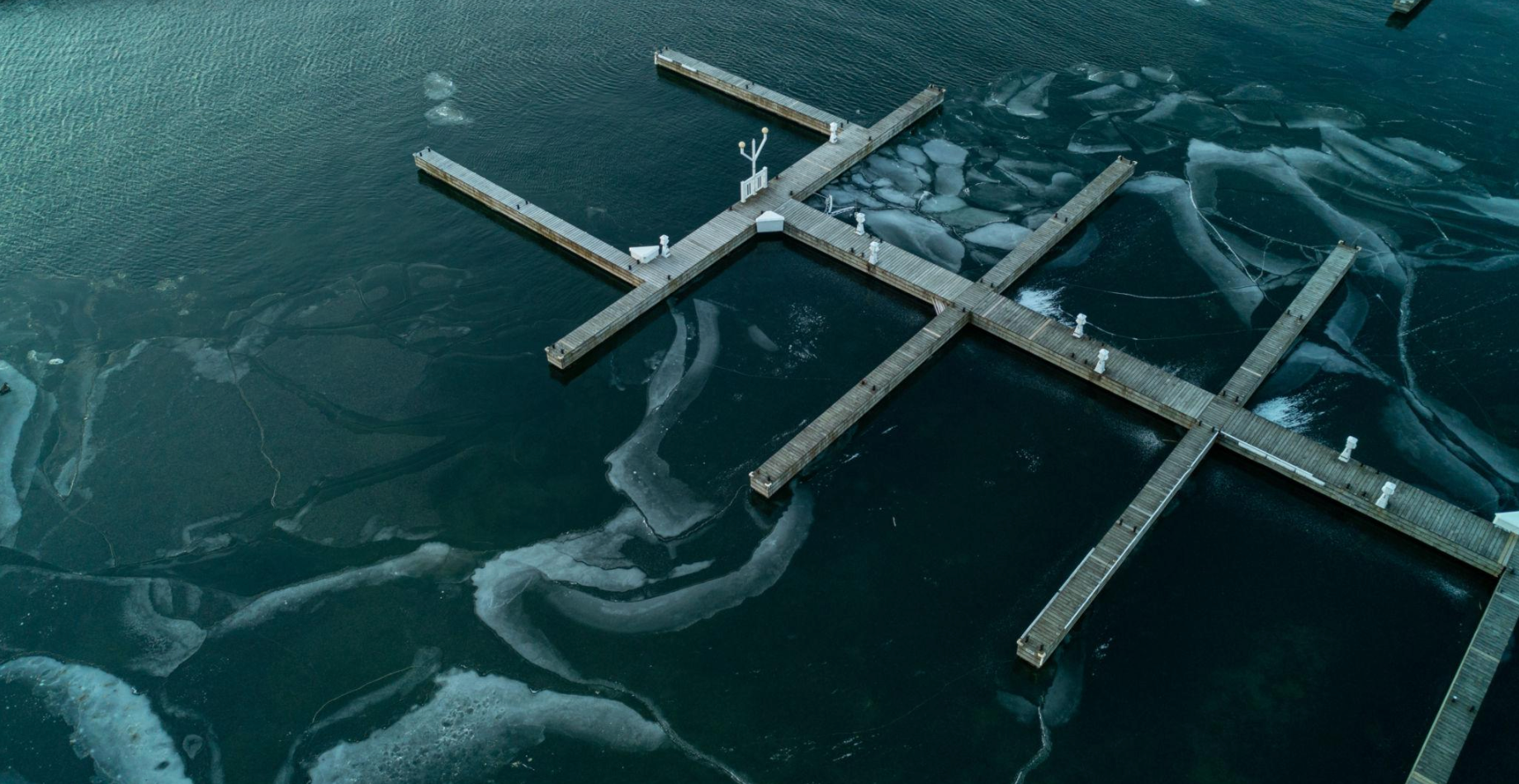
- Straight runs for simple boat mooring
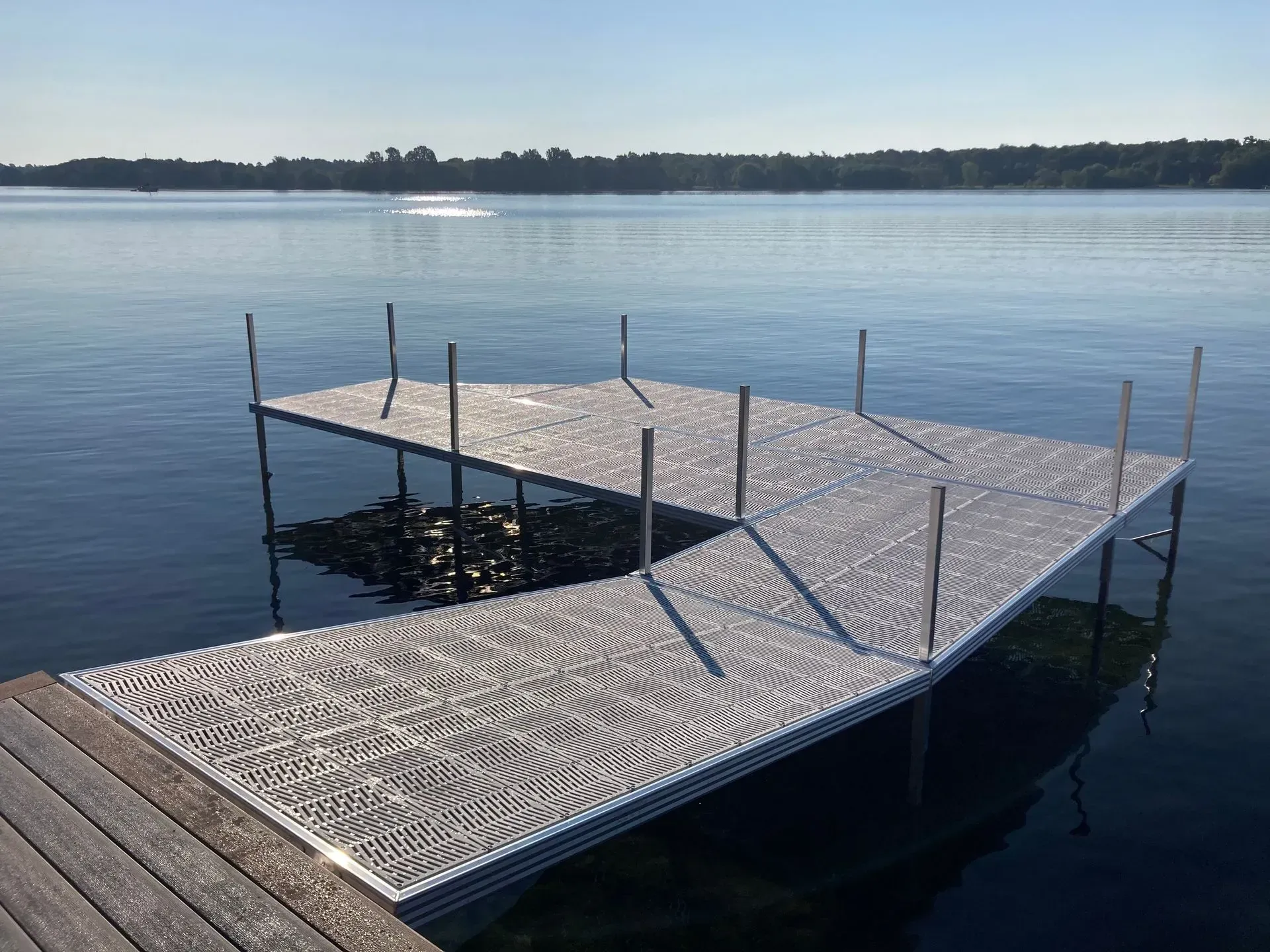
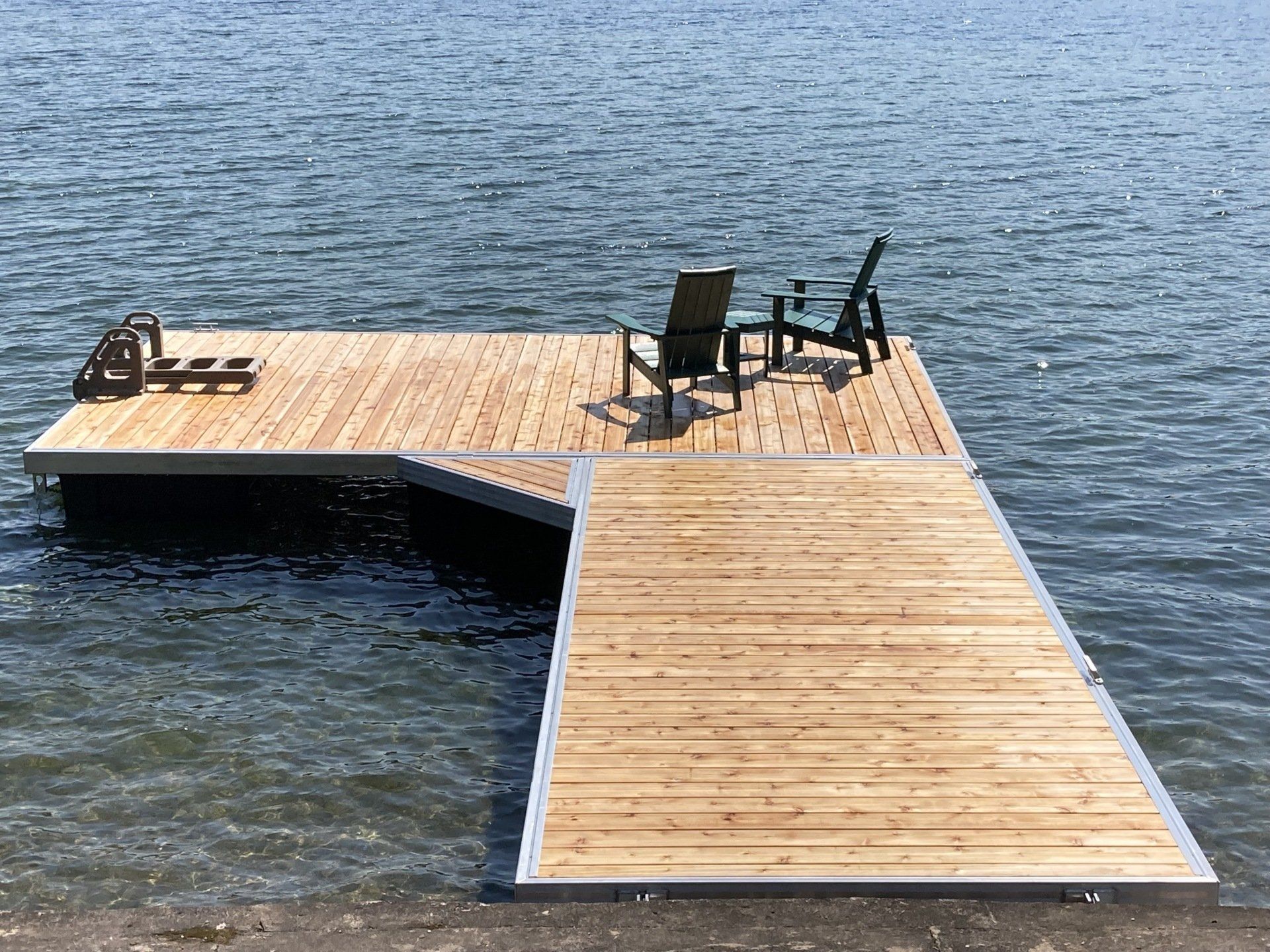
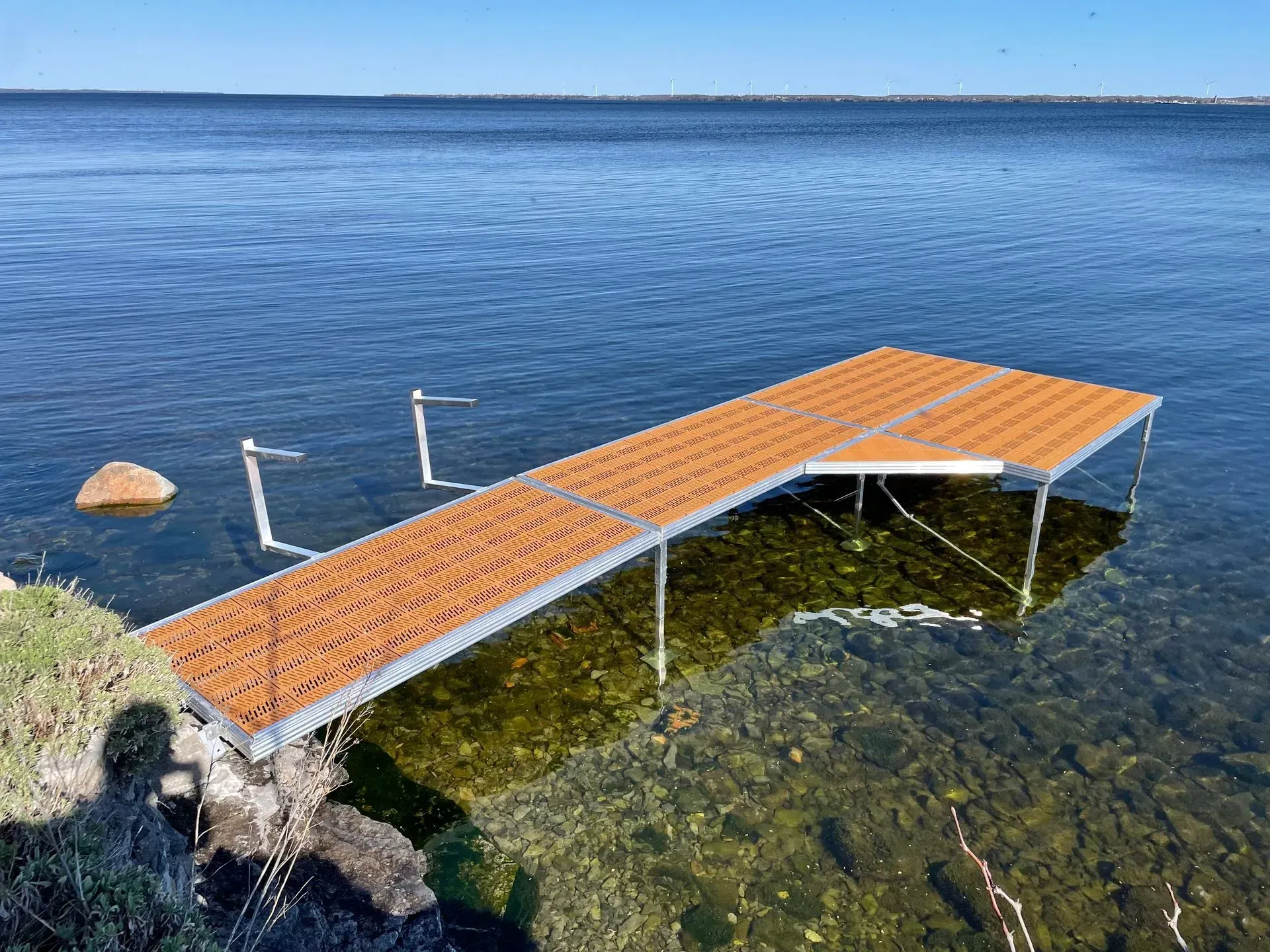
- “L” or “T” configurations for extra slips or seating areas
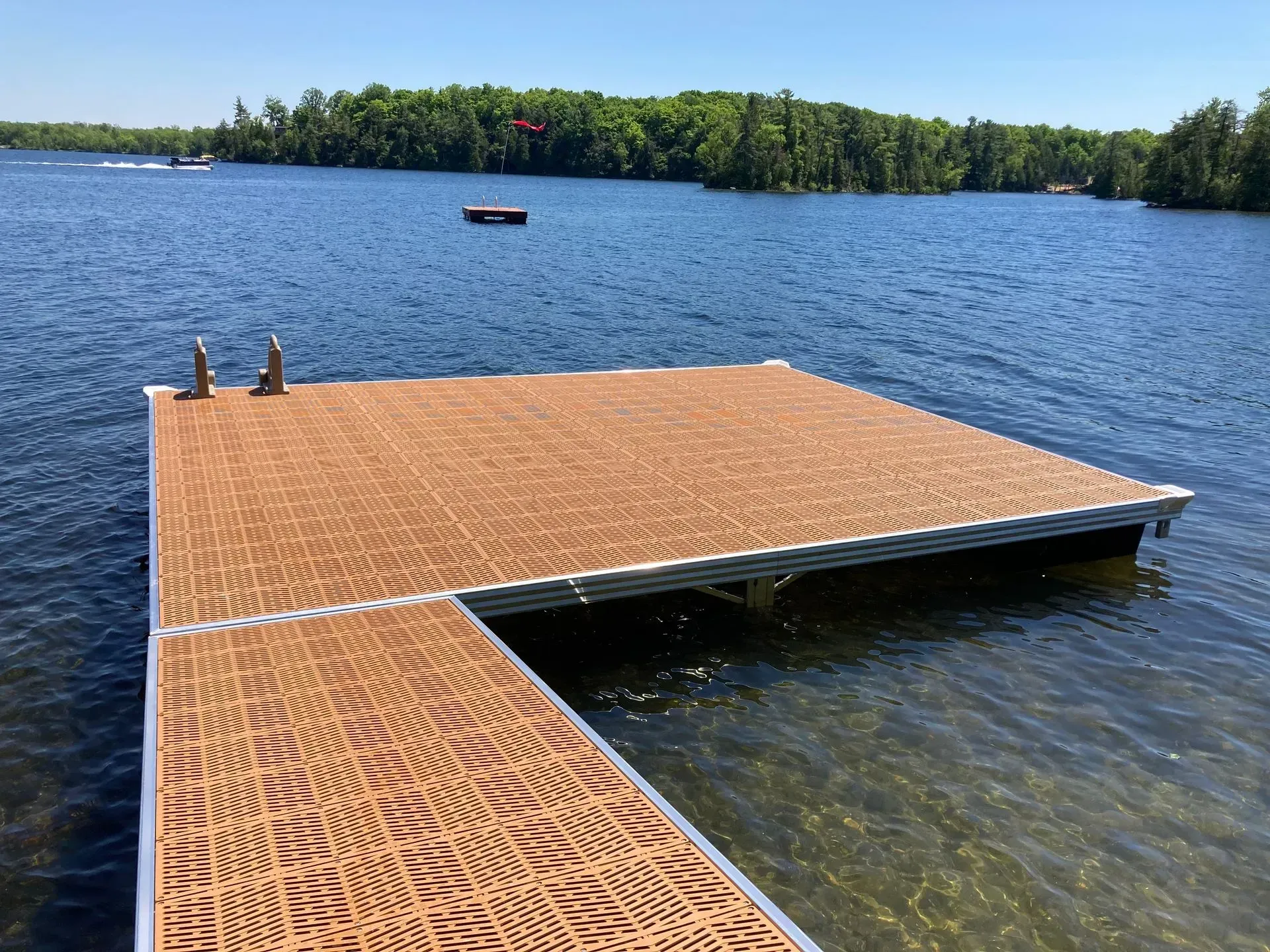
- Larger platforms for swimming, lounging, or entertaining
You can see how different layouts and frame styles come together on our
Dock Systems page, which highlights frame configurations and accessories that support custom designs for each property.
3. Pick a frame and decking that will last
For long term performance, look for:
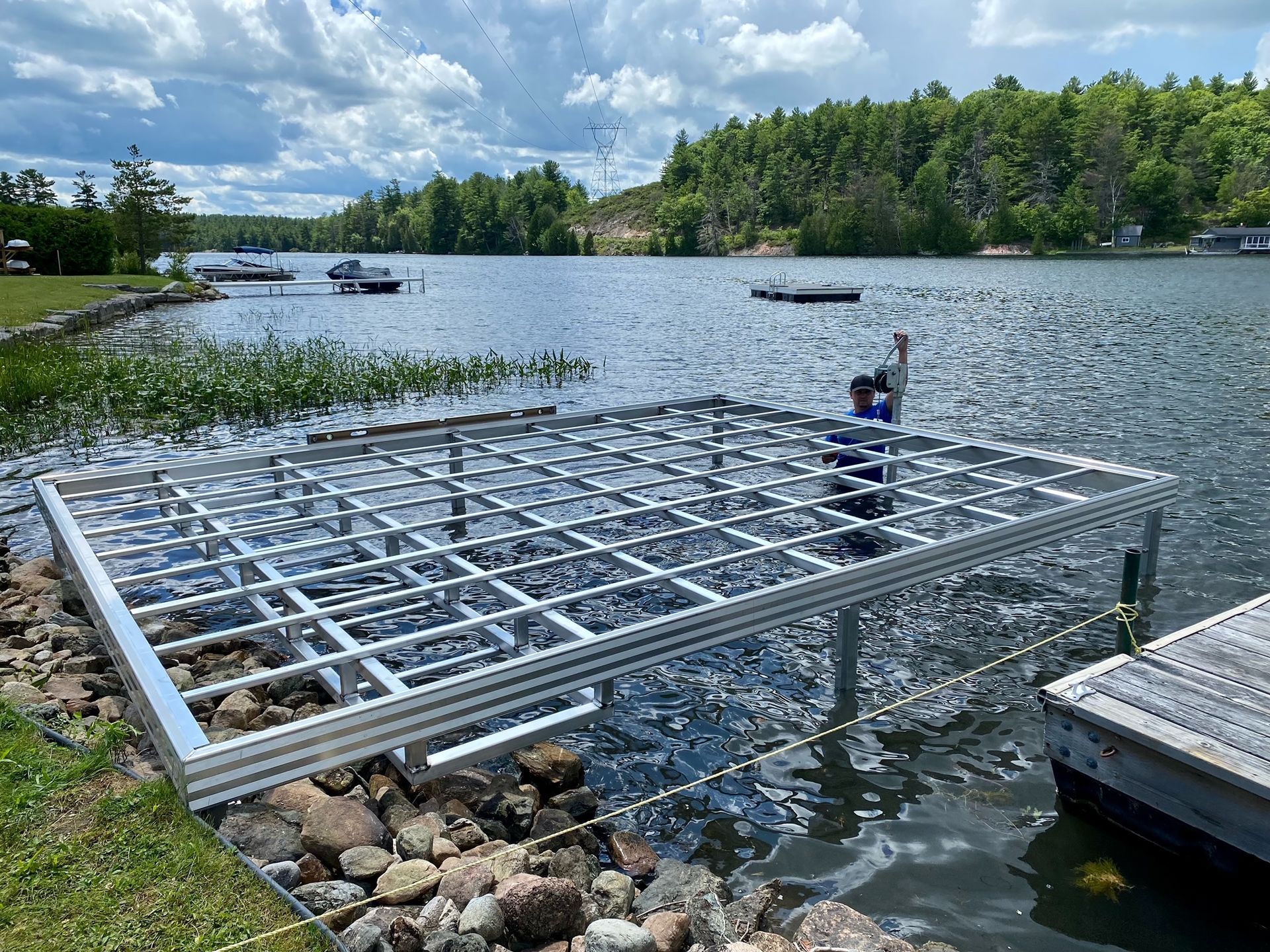
- Marine grade aluminum frames
- Aluminum with stainless steel fasteners helps prevent corrosion and is well suited to Canadian waters.
- Decking that matches your maintenance goals
- Western red cedar offers a classic, natural look and stays comfortable under bare feet.
- Perforated plastic decking provides a low maintenance, slip resistant surface that drains well and stands up to the elements.
The right choice will depend on your style preferences, the look of nearby buildings, and how much maintenance you want to do each season.
4. Match the float style to your seasonal routine
Your seasonal routine plays a big role in which floating dock configuration makes the most sense:
- Standard float systems
Durable plastic floats with internal foam provide long term buoyancy and strength. These are ideal for many permanent or semi-permanent floating dock setups.
- Wheel-in floating systems
Wheel floats work well if you plan to roll the dock in and out seasonally because of ice concerns or local norms. They can make spring installation and fall removal more manageable.
If you want even more modularity, CM Superior Systems supplies brands such as
Wave Armor and
FLOE. Both offer floating dock lines with integrated accessories, bumpers, and sections that can be added or reconfigured as your needs change.
Floating Docks Ontario vs Floating Docks Canada
Most cottage and waterfront owners start by searching close to home, using phrases like floating docks Ontario or boat docks near me. At the same time, the dock still has to stand up to the wider range of Canadian weather conditions.
Strong floating dock systems are built around:
- Materials ready for Canadian summers and winters
Floats with UV protection, aluminum frames built for long exposure to water, and decking chosen for both hot summers and freezing winters.
- Performance proven on real Ontario shorelines
Installations on lakes such as Rideau Lakes and along the St. Lawrence help show how floating docks handle everyday use, wakes, and weather over time.
- Designs that respect local regulations
Layouts and installation methods that align with shoreline protection guidelines and in-water work rules help protect both your investment and the waterway.
A dock that balances local experience with Canadian grade materials will feel like it truly belongs on the property.
Why Work With a Local Dock Company in Rideau Lakes and Eastern Ontario
Online search results for boat docks near me can feel endless, but a local dock company brings a level of understanding that generic options cannot match.
Deep local experience
A team that has been designing and building docks and boat lift systems in Rideau Lakes and Eastern Ontario for decades understands local water levels, bottom conditions, and common challenges.
Products that match real shorelines
When a company both manufactures dock systems and works with leading brands such as
Wave Armor and
FLOE, it can recommend floating docks that truly suit your site instead of forcing a one size fits all solution.
End to end service
From the first phone call and site visit through design, installation, and after sale support, you work with people who know your lake, your dock, and your long term plans.
Photo galleries of real projects are a helpful way to see how floating dock layouts, decking choices, and accessories look once installed on Ontario shorelines. Our Resources section also includes articles that help you compare dock types and plan upgrades, such as:
- The Ultimate Guide to Docks: Floating, Modular, and More
- Floating vs. Pole Docks: Which Is Right for Your Ontario Waterfront?
- Essential Dock Upgrades for Ontario Dock Owners
Planning Your Floating Dock on Rideau Lakes or Nearby
A bit of planning up front makes it easier to get a floating dock that fits your shoreline and your lifestyle.
- Walk your shoreline and take notes
Look at depth, bottom conditions, wind exposure, and any existing structures. - Think about how you use the water
Consider boating, paddling, fishing, swimming, and entertaining. Boat size and number of watercraft all influence the best layout. - Review local guidelines
Before making changes, check the current rules for docks, boathouses, and shoreline work on the Rideau system and other Ontario waterways through Parks Canada and local authorities. - Connect with a dock specialist
A site visit and conversation with an experienced dock team can clarify which floating dock system will support your property and budget over the long term.
Ready to Talk Floating Docks in Ontario?
If you have been searching for floating docks Ontario, floating docks Canada, or boat docks near me for a property on Rideau Lakes or anywhere in Eastern Ontario, now is the time to explore your options.
A well designed floating dock system, built and installed by local experts, can make daily life at the lake easier, safer, and a lot more enjoyable.
Reach out to the team at CM Superior Systems to learn more about
floating dock layouts, materials, and installation options, or to request a quote for your shoreline.