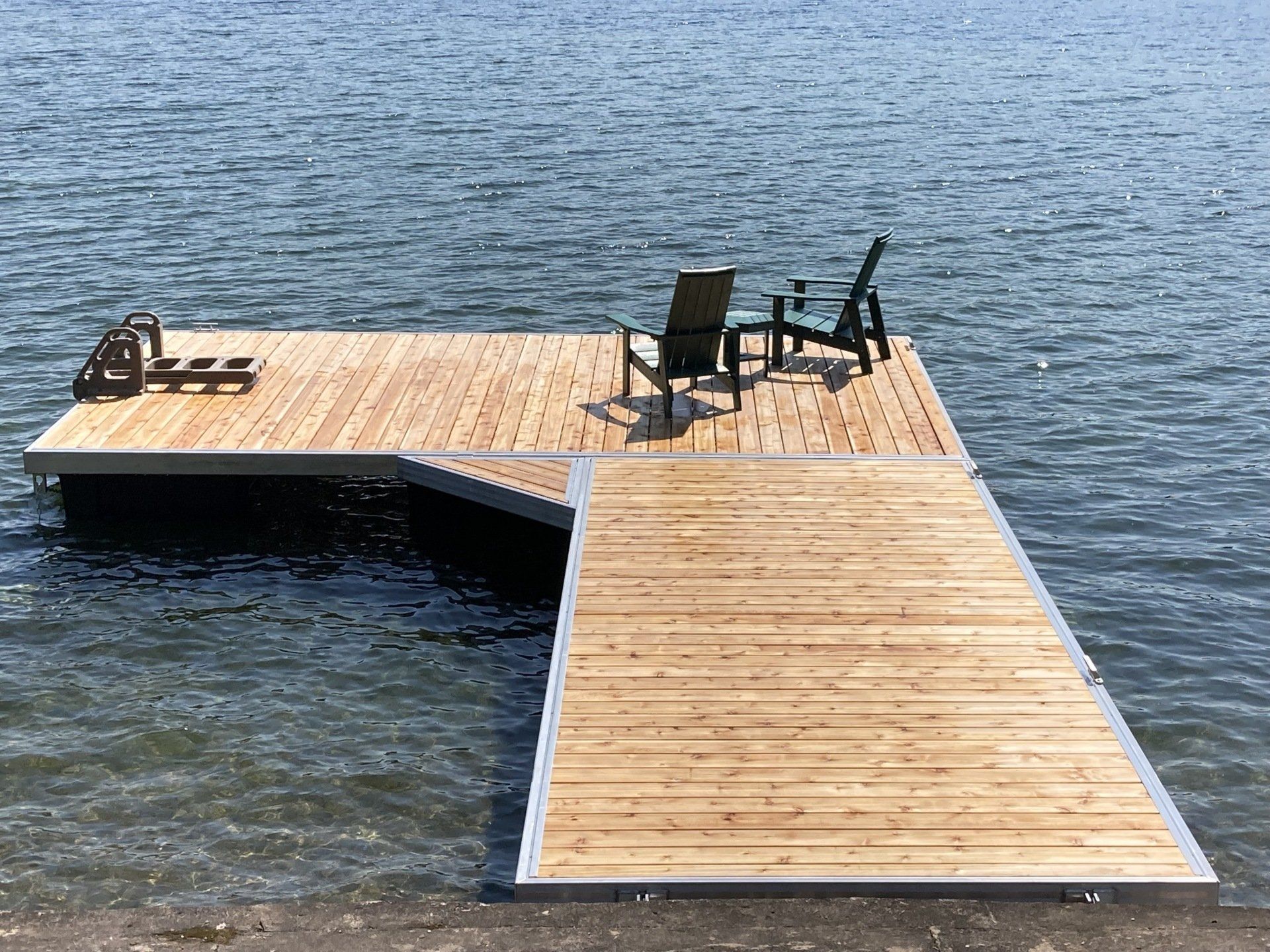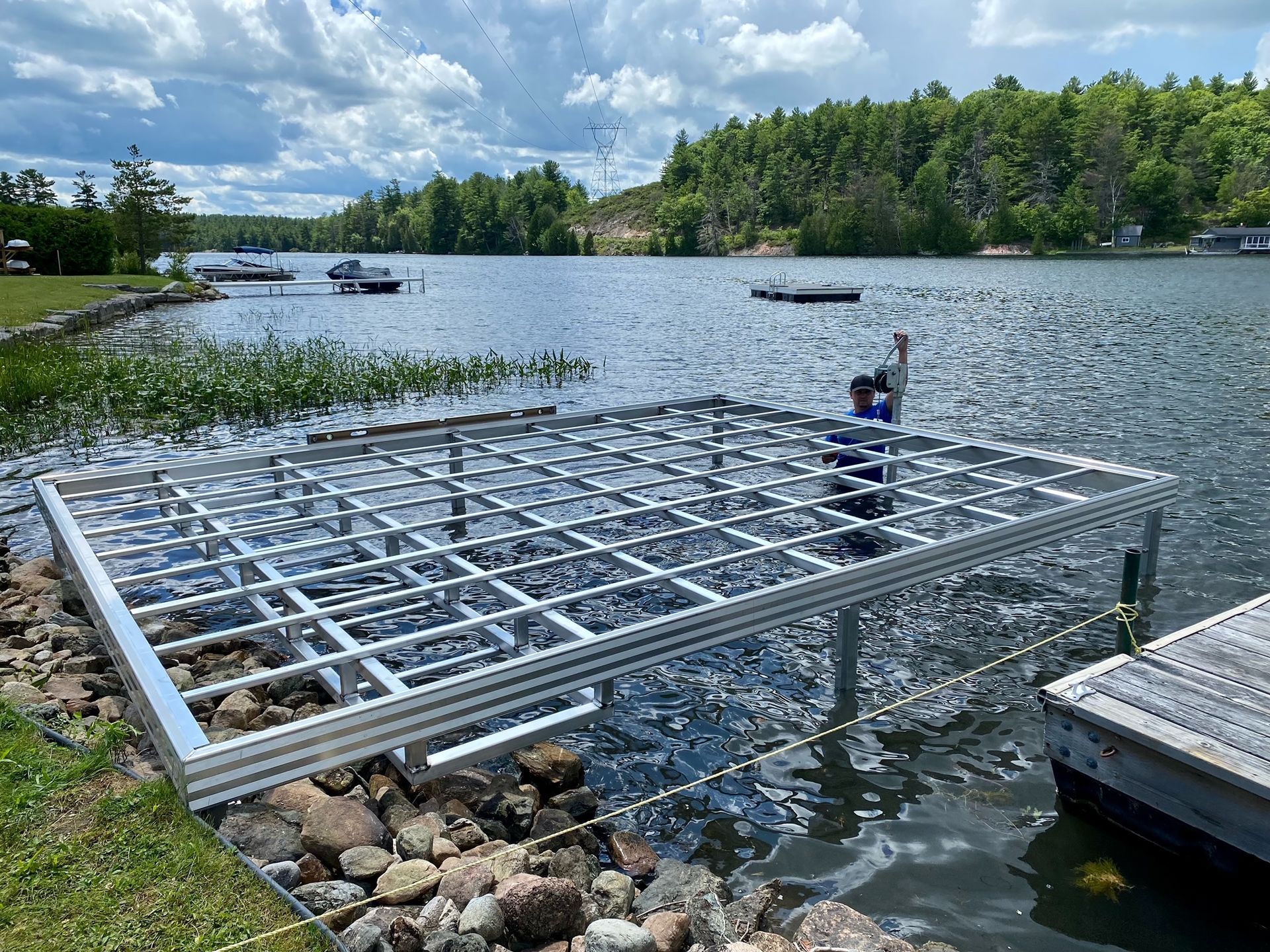

Fall Dock Inspection: 7 Problems to Fix Before Winter
Your dock has had a busy summer.
Months of boat traffic, changing water levels, wind, waves, people, furniture and equipment can all take a toll. By the time fall arrives, small signs of wear may be easy to overlook, especially when you're focused on closing the cottage and getting your boat ready for storage.
Before winter settles in, take some time to give your dock a proper inspection. Catching a loose connection, damaged board or flotation problem now can help you avoid finding a much bigger issue in the spring.
Here are seven areas worth checking before the season ends.
1. Loose Hardware and Connections
Start with the places where your dock comes together.
Bolts, brackets, hinges, fasteners and other connection points can loosen over the course of a busy season. Walk the entire dock and pay attention to anything that moves, rattles or feels less secure than it did earlier in the year.
Look closely at:
- Loose or missing fasteners
- Connections that have shifted
- Bent brackets or hardware
- Excessive movement between dock sections
- Hardware showing significant wear
A connection that seems slightly loose in October may be exposed to months of ice, snow and movement before you use the dock again.
If your current setup is becoming increasingly difficult to maintain, you can also explore different
dock systems and consider what may work better for your waterfront in the future.
2. Cracked, Soft or Damaged Decking
Your decking deserves more than a quick glance.
Walk slowly across the dock and look for boards that are cracked, warped, loose or beginning to deteriorate. Pay attention to areas that feel softer underfoot or have started to change noticeably in appearance.
Wood docks can be particularly vulnerable when moisture and organic debris are allowed to sit against the surface.
Cottage Life recommends clearing leaves, pine needles and other debris from the dock before winter, while also using the opportunity to inspect the wood and identify areas that need attention.
Fall is a good time to spot these issues because you've just finished a full season of use. You know where the dock felt different, where water tended to collect and which areas took the most traffic.
3. Corrosion and Deteriorating Metal Components
Take a closer look at the metal components throughout your dock.
Some surface changes are expected in a waterfront environment, but significant corrosion can weaken hardware and structural components over time.
Check brackets, bolts, hinges, chains and other exposed metal for:
- Heavy rust or corrosion
- Cracking
- Bending or distortion
- Loose connections
- Components that appear noticeably thinner or weaker
Don't forget the areas that aren't immediately visible from above. If you can safely inspect underneath or along the sides of the dock, you may spot deterioration that isn't obvious while you're standing on the decking.
The goal isn't to make your dock look perfect before winter. It's to identify anything that may be affecting how securely the system is holding together.
4. Flotation Problems
If you have a floating dock, pay attention to how it sits in the water.
Has one corner started sitting lower than the others? Does the dock lean noticeably when no one is standing on it? Has its position changed compared with earlier in the season?
Those changes deserve a closer look.
Inspect accessible flotation components for visible cracks, damage or signs that something has shifted. An uneven floating dock can indicate an issue with the flotation underneath, the way weight is distributed, or another part of the system.
You can review our floating dock systems if you're assessing your current setup or considering changes for next season.
Don't assume an uneven dock will simply correct itself after winter. Find out what's causing the change while you can still clearly see and access the system.
5. Excessive Movement or Instability
Every dock moves to some degree, particularly a floating system.
What's more important is whether the movement has changed.
Stand in several areas and pay attention to how the dock responds. Does a section feel unusually unstable? Are two sections moving differently than they used to? Has the dock shifted from its normal position?
Think back to the beginning of the season. If the dock feels noticeably different now, inspect its connections, anchoring and supports.
This becomes particularly important heading into winter. Ice movement, fluctuating water levels and wind can place additional pressure on waterfront structures.
Cottage Life discusses how moving ice and changing winter conditions can damage docks left in the water, which is one reason existing weaknesses are worth identifying before freeze-up.
A dock that's already shifting or unstable in the fall shouldn't be ignored simply because boating season is almost over.
6. Worn Accessories and Attachment Points
It's easy to focus on the dock itself and overlook everything attached to it.
Take a few minutes to inspect your ladder, cleats, bumpers, posts and other accessories.
Check that mounting points are secure and look for damage caused by repeated use throughout the summer. A loose cleat or ladder connection may also have affected the decking or structure surrounding it.
This is also a good opportunity to think about what worked well this season and what didn't.
Maybe you constantly needed another place to tie up. Perhaps getting in and out of the water was awkward. Maybe you realized you need better protection between your boat and dock.
You can explore
dock accessories and start planning those improvements before next season arrives.
7. Damage That Needs More Than a Quick Repair
Not every problem you find during a fall inspection can be solved by tightening a bolt or replacing a board.
If you're seeing widespread deterioration, recurring movement, significant structural damage or multiple problems appearing at once, take a closer look before deciding what to do next.
This is especially important if you're considering a larger repair, replacement or change to the existing dock.
Waterfront work in Ontario can be subject to provincial requirements depending on the location and type of work being completed. The Government of Ontario provides information about when Crown land and shore land work may require authorization, along with circumstances where certain activities may proceed without a work permit.
Before making significant changes, confirm what applies to your specific waterfront and project.
Give Your Dock One Last Look Before Winter
By fall, you've had an entire season to see how your dock performs.
Use that information.
Think about the sections that moved more than expected, the board you kept meaning to fix, the hardware that needed tightening twice, or the corner that started sitting a little lower in August.
Those details can tell you a lot about what needs attention.
A thorough fall inspection gives you the chance to deal with smaller problems now, plan larger work for the appropriate time, and head into winter with a much better understanding of your dock's condition.
Then, when the first warm days return, you'll already know what your waterfront needs for the season ahead.