
How Much Weight Can a Dock Hold? What Waterfront Owners Should Know
A dock can be one of the busiest spaces at a waterfront property. One minute it is supporting a couple of chairs and fishing gear; the next, it may be filled with family, coolers, water toys, and everything needed for an afternoon on the lake.
That naturally raises an important question: how much weight can a dock actually hold?
There is no single weight limit that applies to every dock. Capacity depends on the dock system, dimensions, flotation or support structure, materials, condition, and how weight is distributed across the surface. A dock that looks large and sturdy may have very different limitations from another dock of a similar size.
Understanding those factors is important before adding heavy furniture, equipment, or simply inviting a large group to gather at the end of the dock.
There Isn't One Universal Dock Weight Limit
It would be convenient if every dock came with a simple answer, but dock capacity does not work that way.
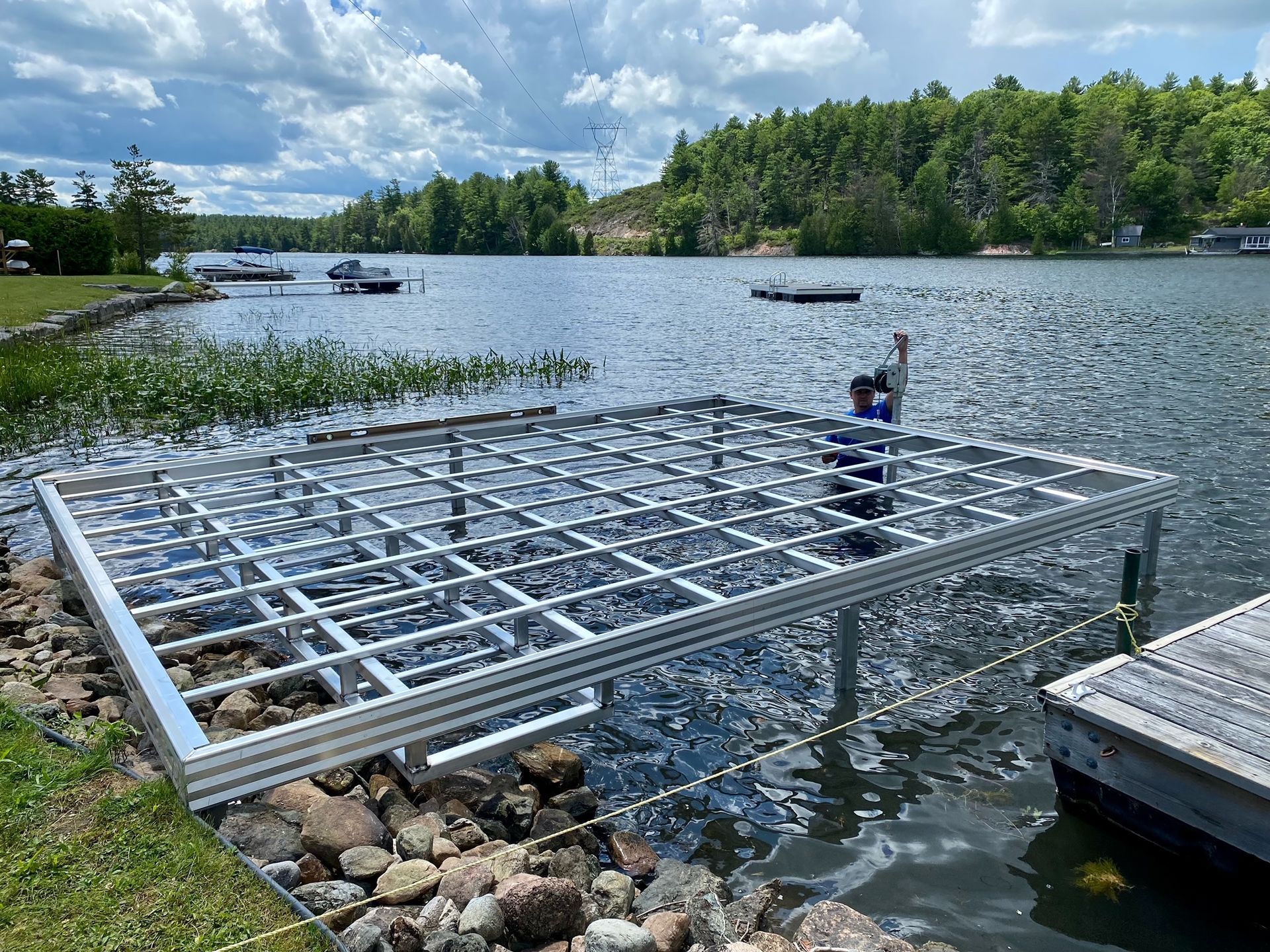
A floating dock relies on buoyancy to support the dock itself as well as everything placed on top of it. A pole dock transfers its load through its supporting structure to the lakebed. Different materials, dimensions, designs, and installation conditions can further change what a particular system is designed to handle.
Even two floating docks of the same length can have different capacities depending on the number and type of floats underneath them.
That is why a dock's actual specifications should always take priority over a general estimate found online.
Flotation Plays a Major Role for Floating Docks
For a floating dock, the flotation underneath the structure is doing much of the work.
The basic principle is buoyancy: as a floating structure displaces water, the water provides an upward force that allows the structure and its load to remain afloat. The National Research Council Canada discusses the same underlying principle in its work on buoyant foundations, where buoyancy blocks provide the flotation needed to support a structure.
For a dock, factors such as float size, quantity, placement, and design all influence how much additional load the system can safely accommodate.
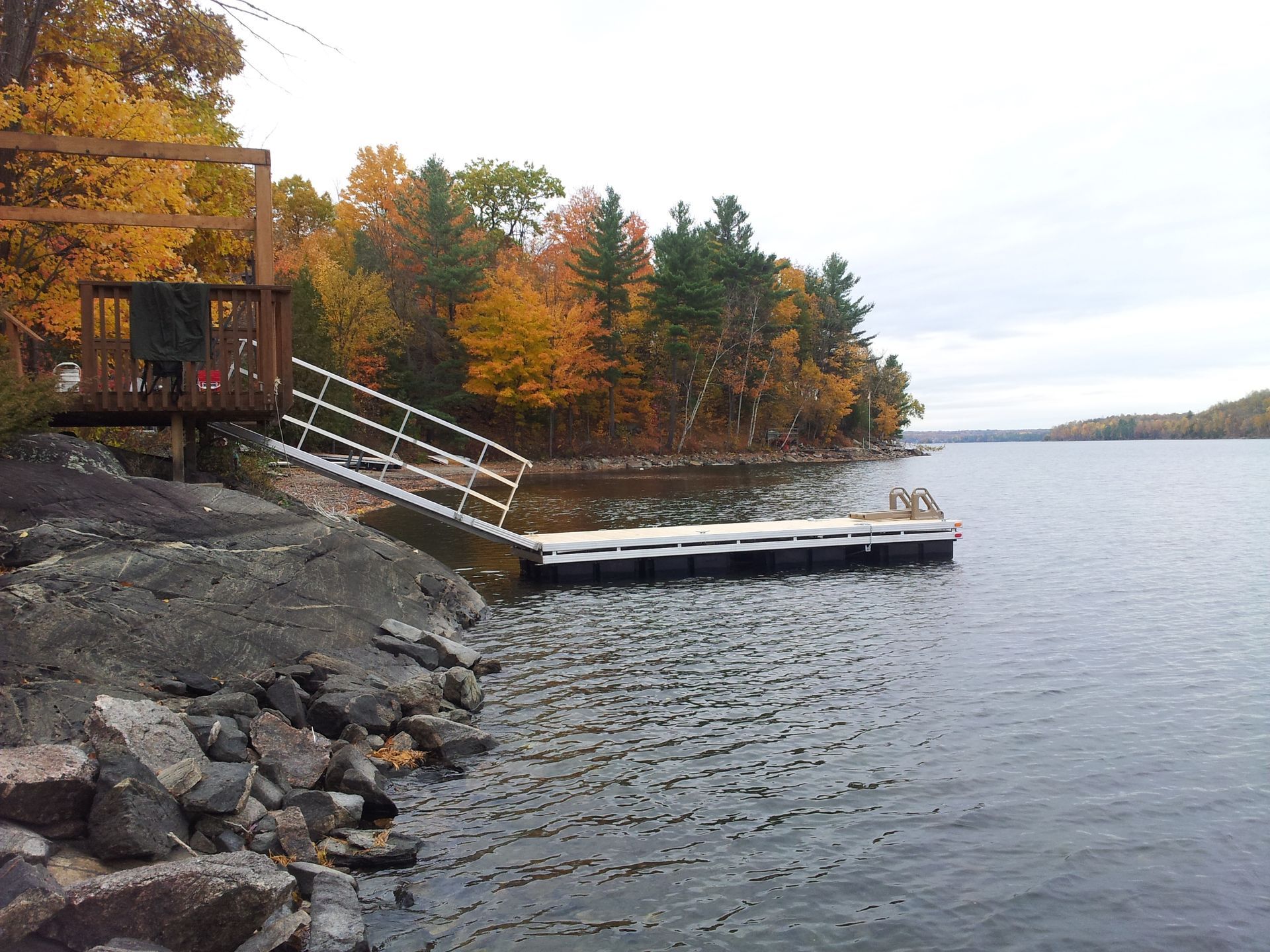
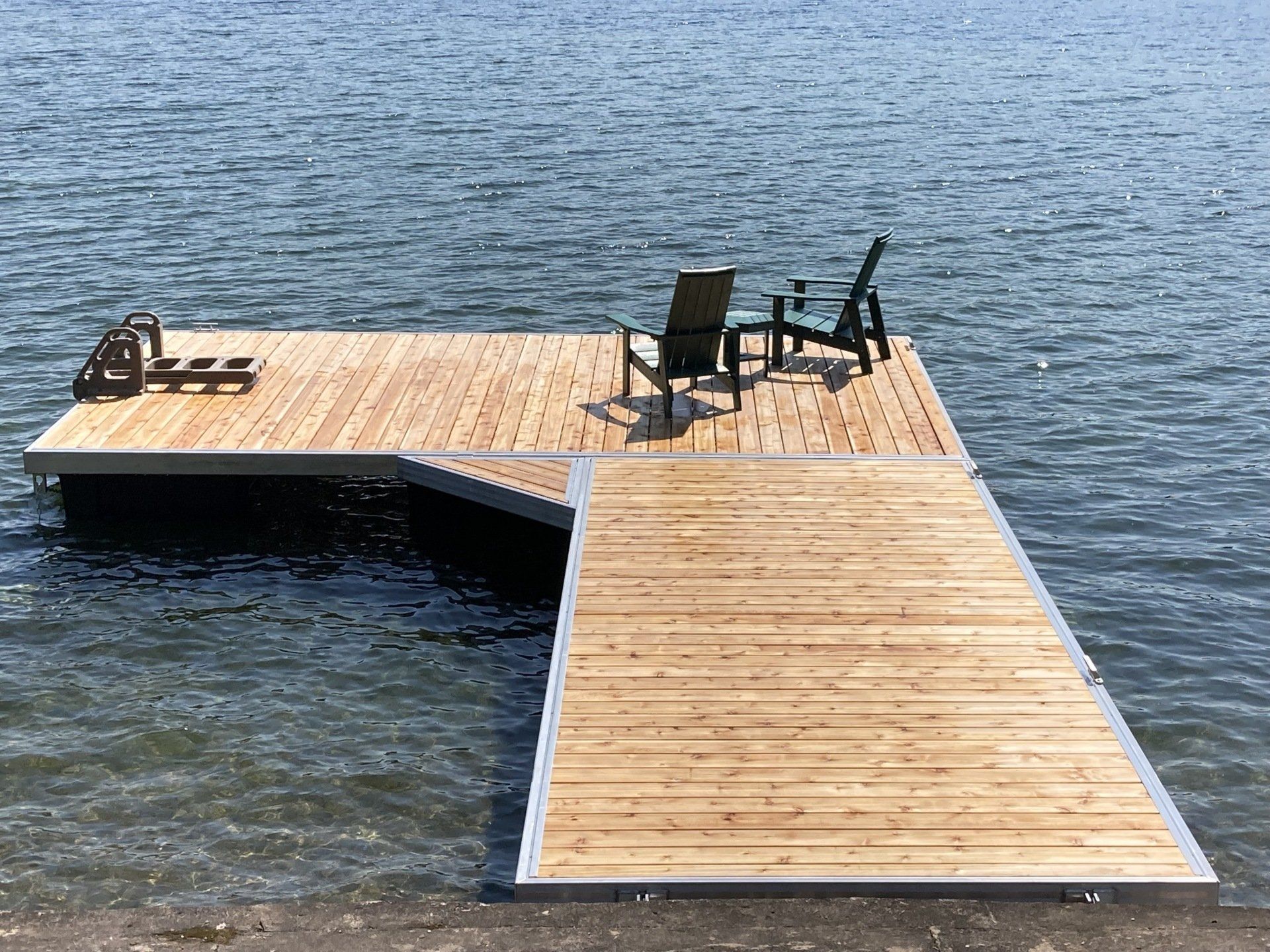
Our floating docks use purpose-built flotation systems and are designed for deep water, changing depths, and unstable bottoms. Wider floating docks also provide greater stability, which can make a significant difference in how the dock feels underfoot.
The Dock's Own Weight Counts Too
When thinking about dock capacity, it is easy to focus exclusively on what is being placed on top.
The dock itself already has weight.
The frame, decking, floats, hardware, ladders, benches, and other permanent components all contribute to the overall load the flotation or supporting structure must carry.
This becomes particularly important when modifying an existing dock. Adding a large platform, heavier decking, built-in seating, or additional accessories can change the demands placed on the original structure.
A dock system should be evaluated as a whole rather than treating everything above the waterline as available capacity.
Weight Distribution Can Matter as Much as Total Weight
Imagine six adults standing evenly around a large dock platform.
Now imagine those same six adults standing shoulder-to-shoulder along one corner.
The total weight has not changed, but the way the dock responds certainly can.
Concentrated loads can cause one area of a floating dock to sit lower in the water or place additional stress on specific structural components.
The Canadian Centre for Occupational Health and Safety makes the same broader point when discussing platform loading: rated capacities should not be exceeded, and loads should be evenly distributed. While its guidance relates to elevated work platforms rather than docks, the underlying load-distribution principle is useful when thinking about how any designed platform carries weight.
For waterfront owners, that means considering not only how much is being placed on a dock, but where it is being placed.
People Aren't the Only Weight on a Dock
A quiet afternoon can quickly turn into a surprisingly heavy load.
Consider everything that might end up on a waterfront platform:
- Patio furniture
- Storage boxes
- Large coolers
- Kayaks and paddleboards
- Fishing equipment
- Water toys
- Dock boxes
- Barbecues or other equipment
- Several adults and children at once
Individually, many of these items seem insignificant. Together, they can add hundreds or even thousands of pounds.
This is particularly important when adding something substantial to a dock that was not part of the original design. Before installing large permanent features or significantly changing how a dock is used, its capacity and structural suitability should be confirmed.
Dock Type Changes the Equation
A floating dock and a pole dock support weight differently, which is another reason there is no universal capacity figure.
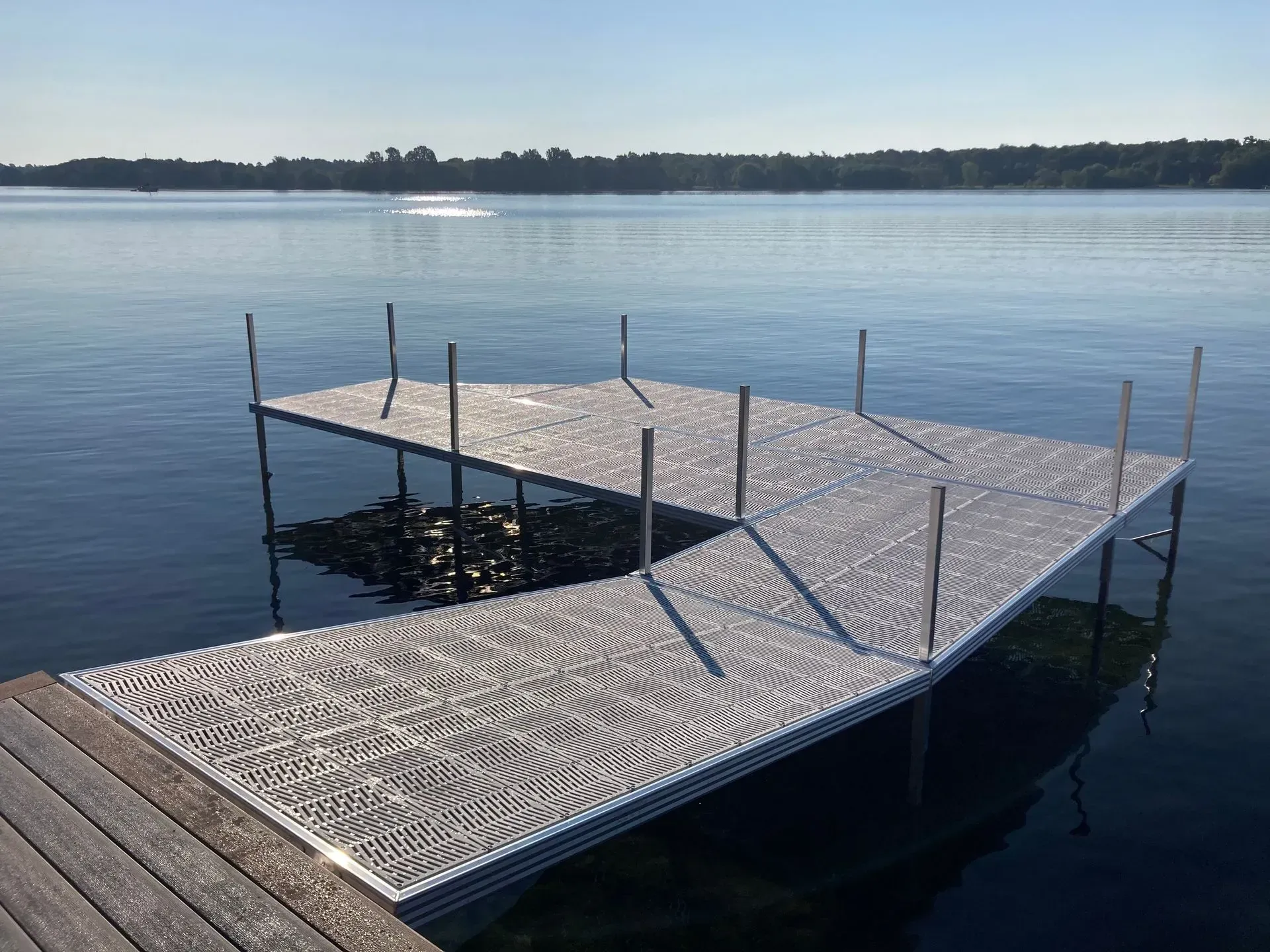
We recommend pole docks primarily for shallower water under six feet, while floating docks are recommended for deeper water, changing depths, or unstable bottoms.
The shoreline itself therefore plays a role in determining the appropriate structure.
A dock designed specifically for the water depth, lakebed, exposure, and intended use of a property is much easier to plan appropriately than a one-size-fits-all system.
An Older Dock May Not Perform Like It Once Did
Original capacity is only part of the story.
Years of exposure to water, weather, ice, and regular use can affect structural components. Damaged flotation, loose connections, deteriorating decking, corrosion, or other wear can change how safely an older dock handles loads.
Warning signs deserve attention, particularly if the dock:
- Suddenly sits lower in the water
- Leans noticeably when people gather in one area
- Feels less stable than it did previously
- Has damaged or waterlogged floats
- Shows movement at structural connections
- Has visibly deteriorated components
A change in how a dock responds to normal use can be more meaningful than any generic capacity number.
Accessories Should Be Part of the Original Plan
Accessories can transform a basic dock into a much more functional waterfront space, but they should still be considered as part of the overall design.
Benches, ladders, storage solutions, watercraft accessories, and other additions all occupy space and add weight.
We offer dock accessories that can be incorporated into different dock configurations. Planning these features alongside the dock itself makes it easier to create a layout that suits the way the waterfront will actually be used.
What About a Big Group of People?
This is often the practical question behind searches about dock capacity.
If a dock regularly becomes the gathering place for family and friends, its design needs to reflect that use.
A narrow walkway used primarily to reach a boat has very different demands from a large platform intended for seating, swimming, entertaining, and loading watercraft.
There is also a safety component whenever groups gather near the water. Ontario's guidance for water locations and dockside safety identifies docks, piers, wharves, and similar waterfront environments as locations where appropriate safety planning is important.
Rather than trying to calculate how many people can fit based solely on square footage, waterfront owners should rely on the specifications and intended use of their particular dock system.
One of the best times to think about dock capacity is before the dock is built.
Instead of planning only around dimensions, consider what a normal summer weekend will actually look like.
Will the dock mainly provide access to a boat?
Will it double as a swimming platform?
Will six or eight people regularly gather at the end?
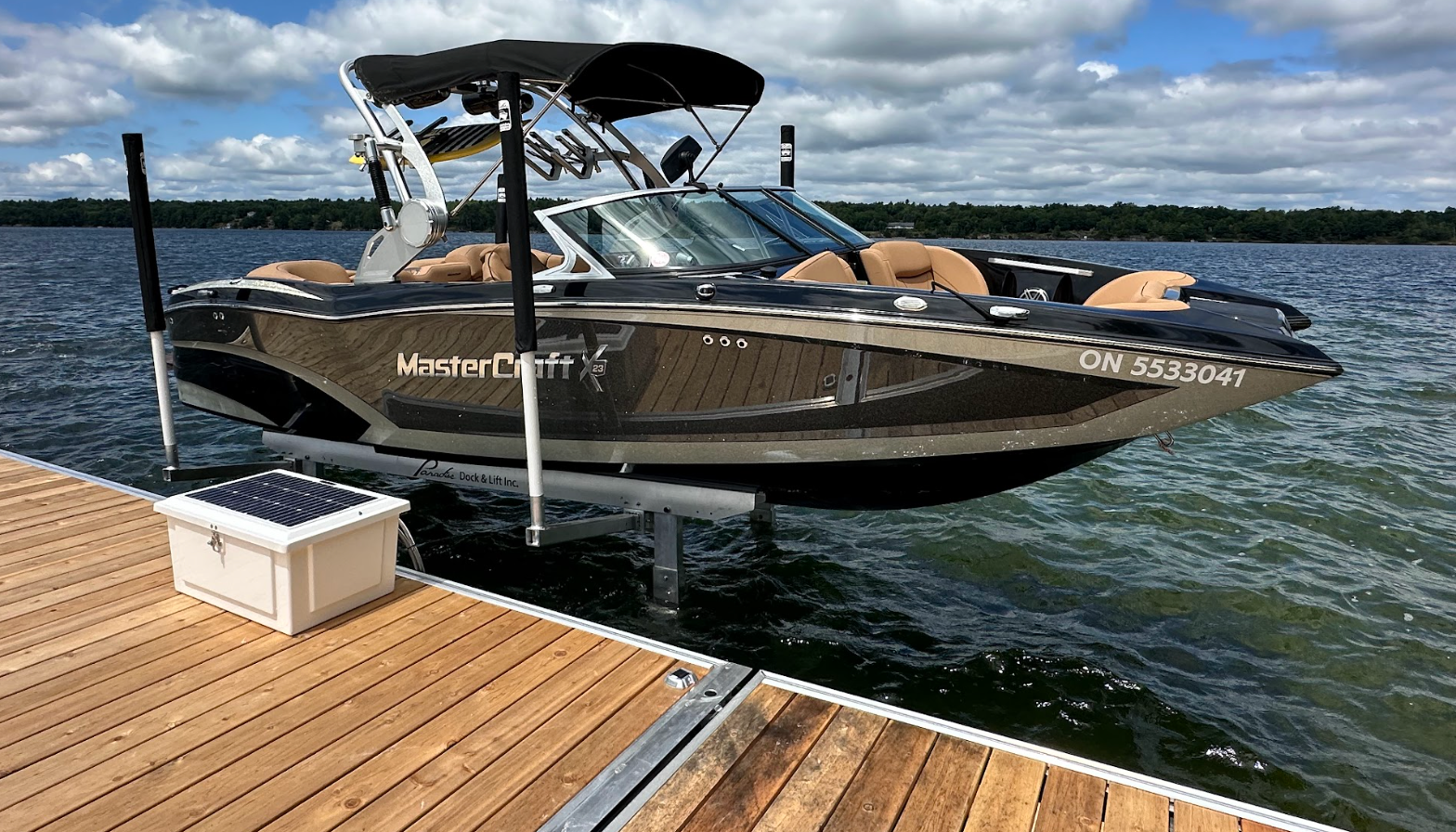
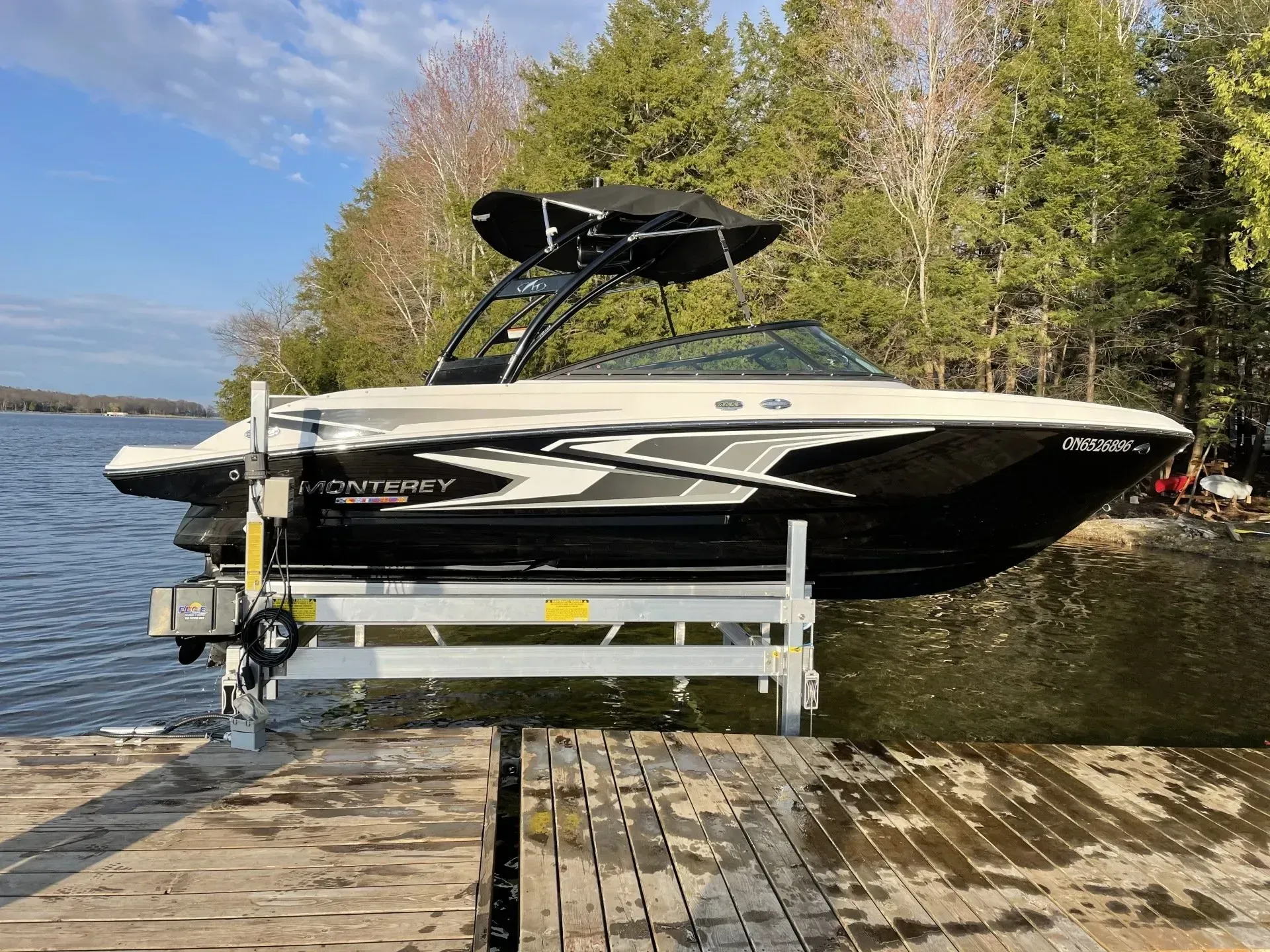
Will there be benches, storage, paddleboards, or PWCs?
Could the family grow or the waterfront setup change in the future?
Answering those questions helps determine the appropriate dock type, dimensions, layout, and flotation or support requirements from the beginning.
It also reduces the likelihood of discovering several years later that the dock no longer suits the way the waterfront is being used.
So, how much weight can a dock hold?
The safest answer is: whatever that particular dock system has been designed and rated to support.
Dock type, flotation, structural design, dimensions, condition, accessories, and weight distribution all influence capacity. That makes a manufacturer or professionally determined rating far more valuable than a generic pounds-per-square-foot figure found online.
For waterfront owners who expect their dock to become a gathering space, planning for real-world use from the beginning can make the entire waterfront more comfortable, functional, and enjoyable.
A dock should not simply reach the water. It should be designed for everything that happens once you get there.