
Rideau Lakes Drawdown: What Fall Water Levels Mean for Your Dock and Boat Lift
If you have spent a few autumns at the cottage, you have seen it happen. Around Thanksgiving, the waterline along your shore starts to slip back. Rocks you forgot about reappear. The boat that floated easily off the lift in August suddenly feels a little closer to the bottom.
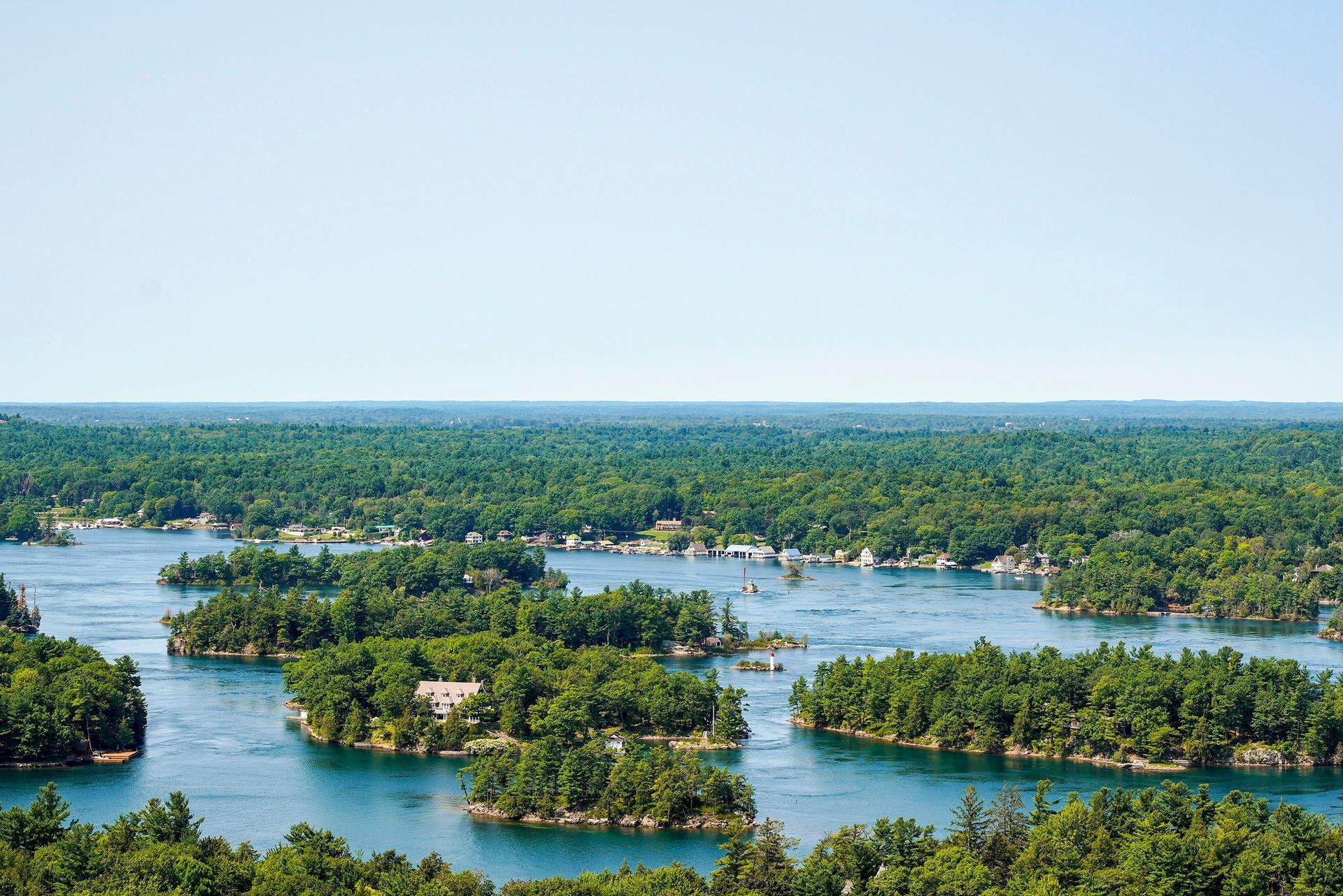
That is the Rideau drawdown, and it happens every year. For cottage owners on Big Rideau, Upper Rideau, Lower Rideau and the lakes that feed them, it is one of the biggest factors in how a dock and boat lift perform across a full season. Here is what is going on, and what it means for your waterfront.
What Is the Rideau Drawdown?
The Rideau Canal is a managed waterway. Parks Canada uses a system of dams and spillways to keep enough water in the navigation channel through boating season, then lowers levels in the fall to make room for the rain, snow and spring melt still to come.
Across the system, water levels come down to winter levels from mid-October until mid-November. You can follow current levels for your section on the Parks Canada Water Management InfoNet.
Some lakes do more of the heavy lifting than others. Parks Canada treats Bobs Lake and Wolfe Lake as reservoir lakes, and Upper Rideau and Big Rideau as both reservoir and canal lakes. These lakes give up water through the summer to keep the canal running, which is why many owners notice levels dropping well before fall arrives.
Why Mid-October Matters
The timing is tied to fish. Lakes that support lake trout, including Big Rideau, Bobs and Crow Lake, are brought to their lowest levels by mid-October to line up with the fall spawn.
The practical takeaway: by the time most families close up on Thanksgiving weekend, the water at the dock is already at or close to its low point for the year. If something about your dock or lift feels off in October, that is usually the water telling you something about your setup.
What the Drawdown Means for Your Dock
Every dock type responds to falling water in its own way.
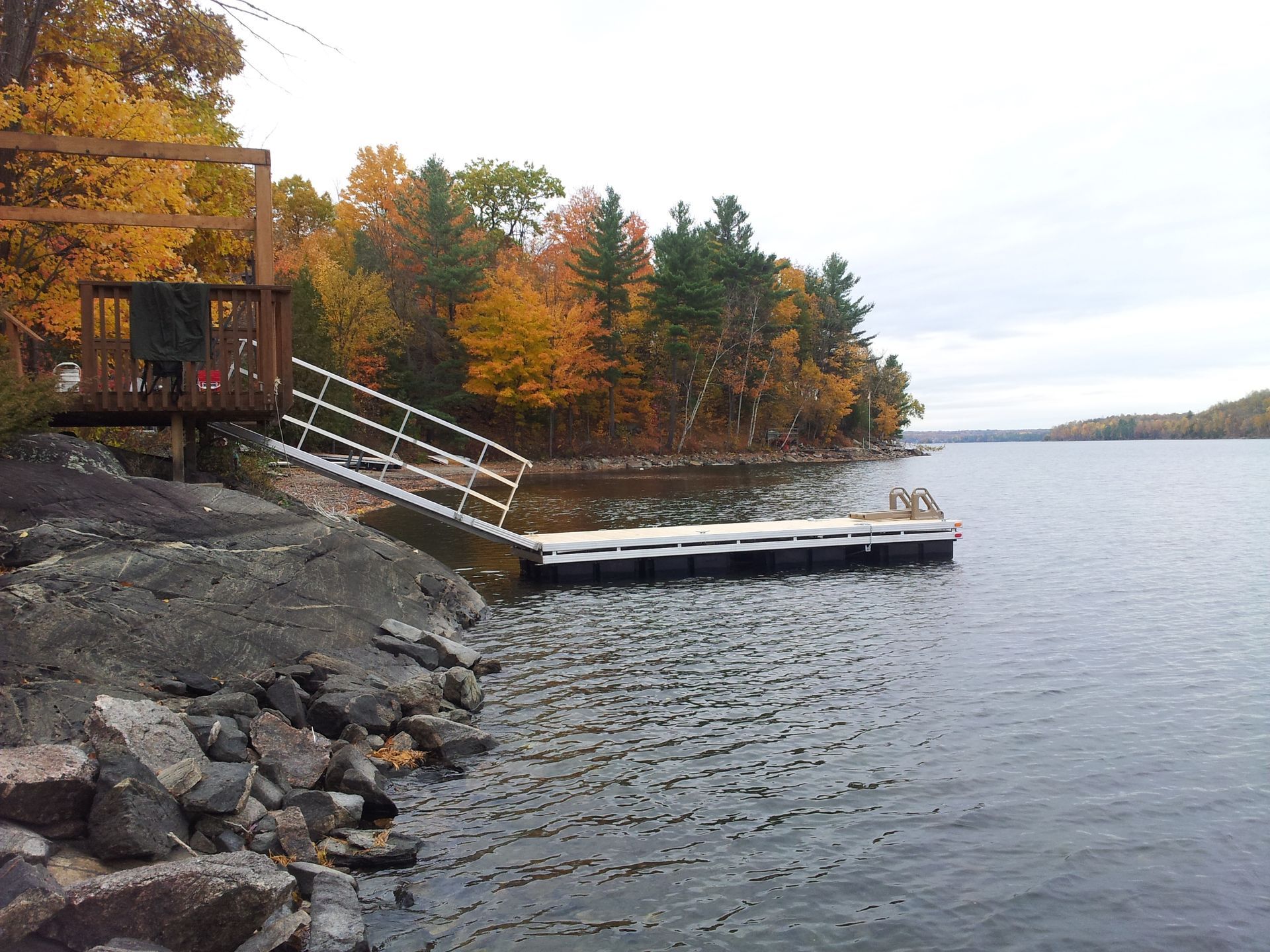
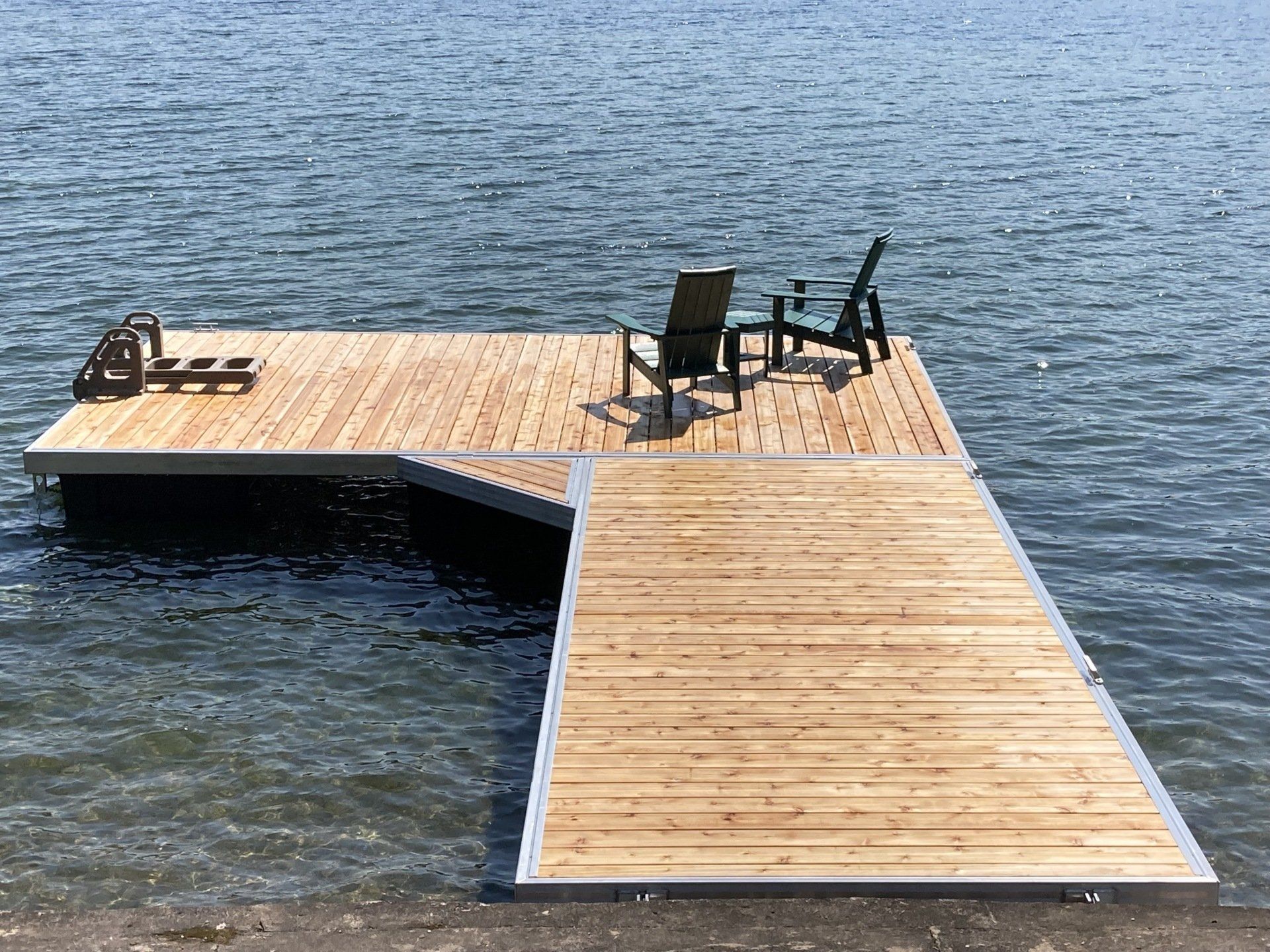
Floating docks ride the water. As the level drops, the dock drops with it, so the deck stays at the same height above the surface. The thing to watch is the connection to shore. A ramp that sat at a comfortable angle in July can get noticeably steeper as the lake falls, and the dock can settle onto rocks in shallow spots. Planning the ramp length and the dock's position around your lowest water keeps it comfortable all season. Learn more about floating docks.
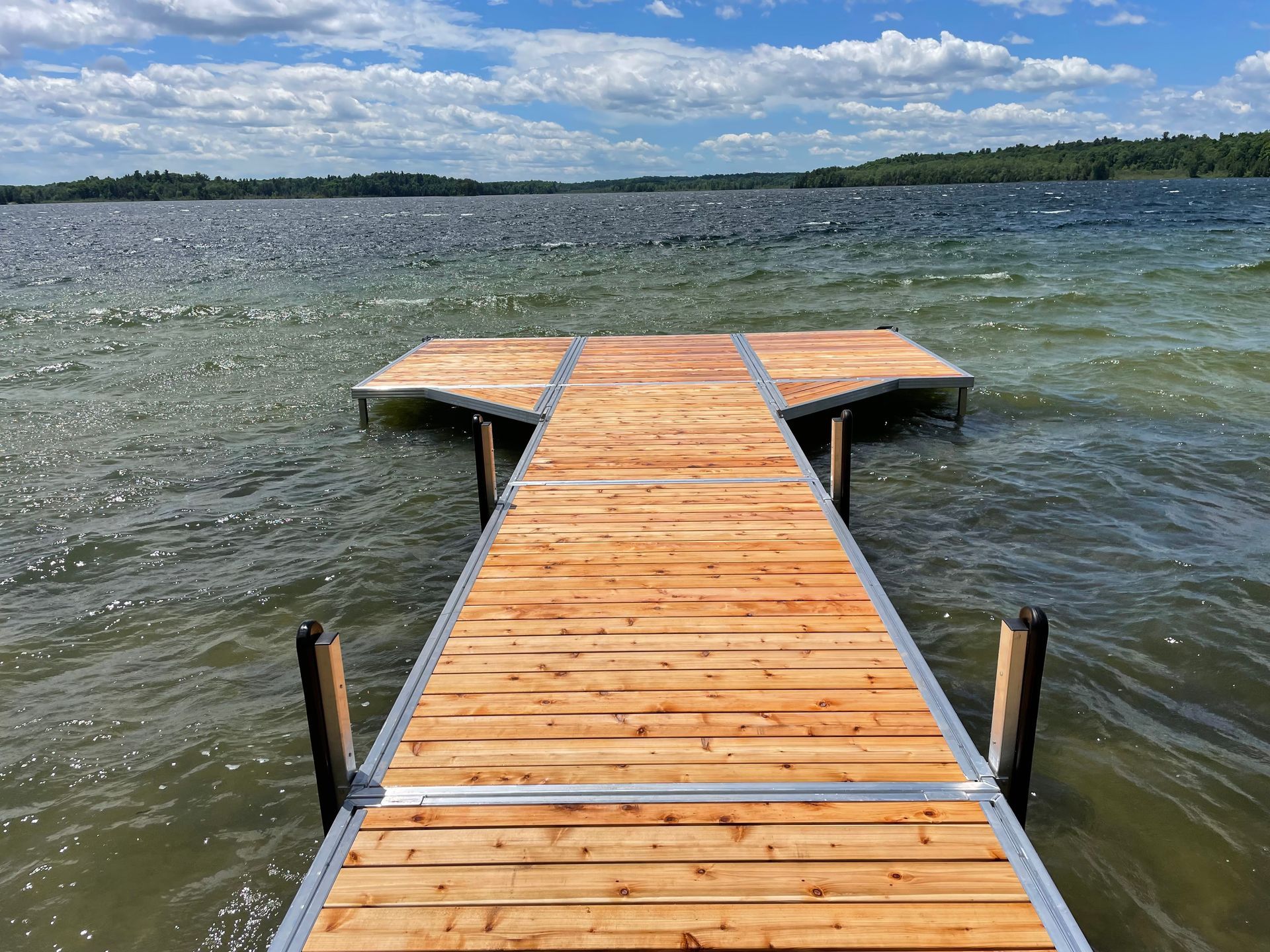
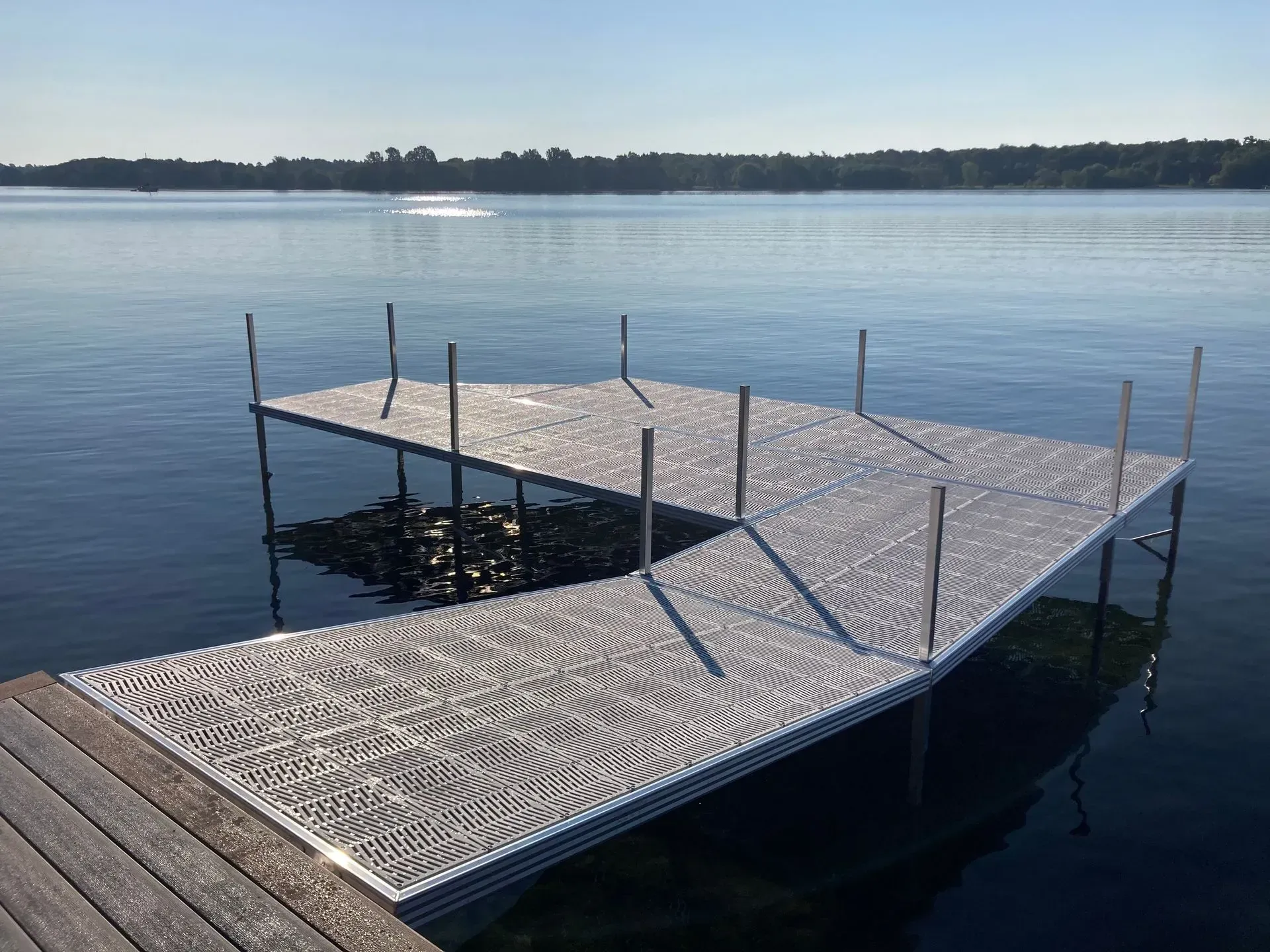
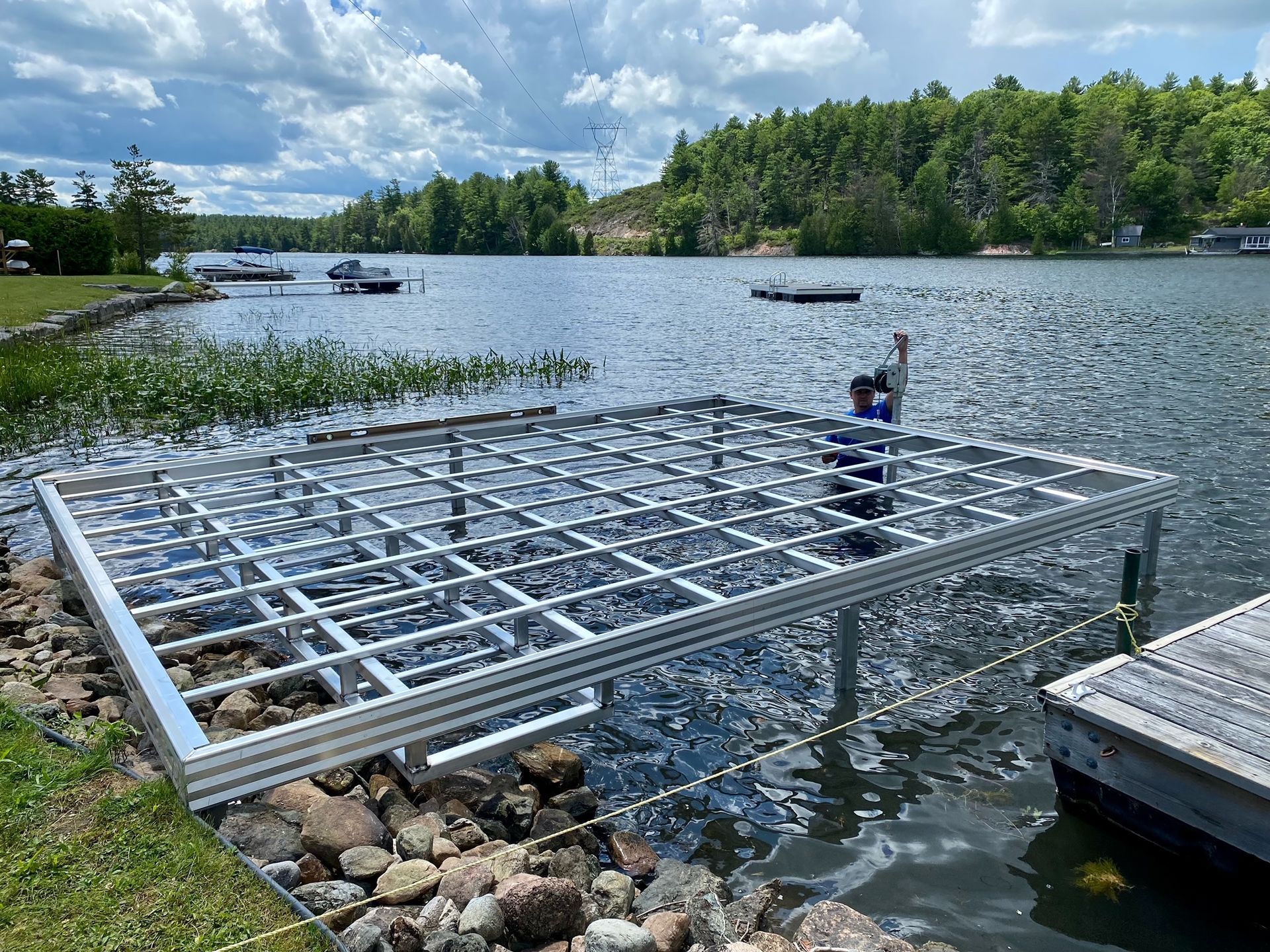
Pole and tower lift docks stand on legs, so the deck stays put while the water moves. By fall, that can leave the deck sitting higher above the water than it did all summer, which makes boarding and swimming less comfortable. Adjustable legs make all the difference. FLOE docks use easy-level legs, so you can adjust the dock without getting wet, and a tower lift dock lets you raise the whole frame out of the water at the end of the season.
Older fixed or crib docks cannot adjust at all. If yours sits awkwardly high every fall or disappears under water every spring, it may never have been matched to how your lake moves. Our post on repairing or replacing a dock covers the signs it is time for something better suited.
What It Means for Your Boat Lift
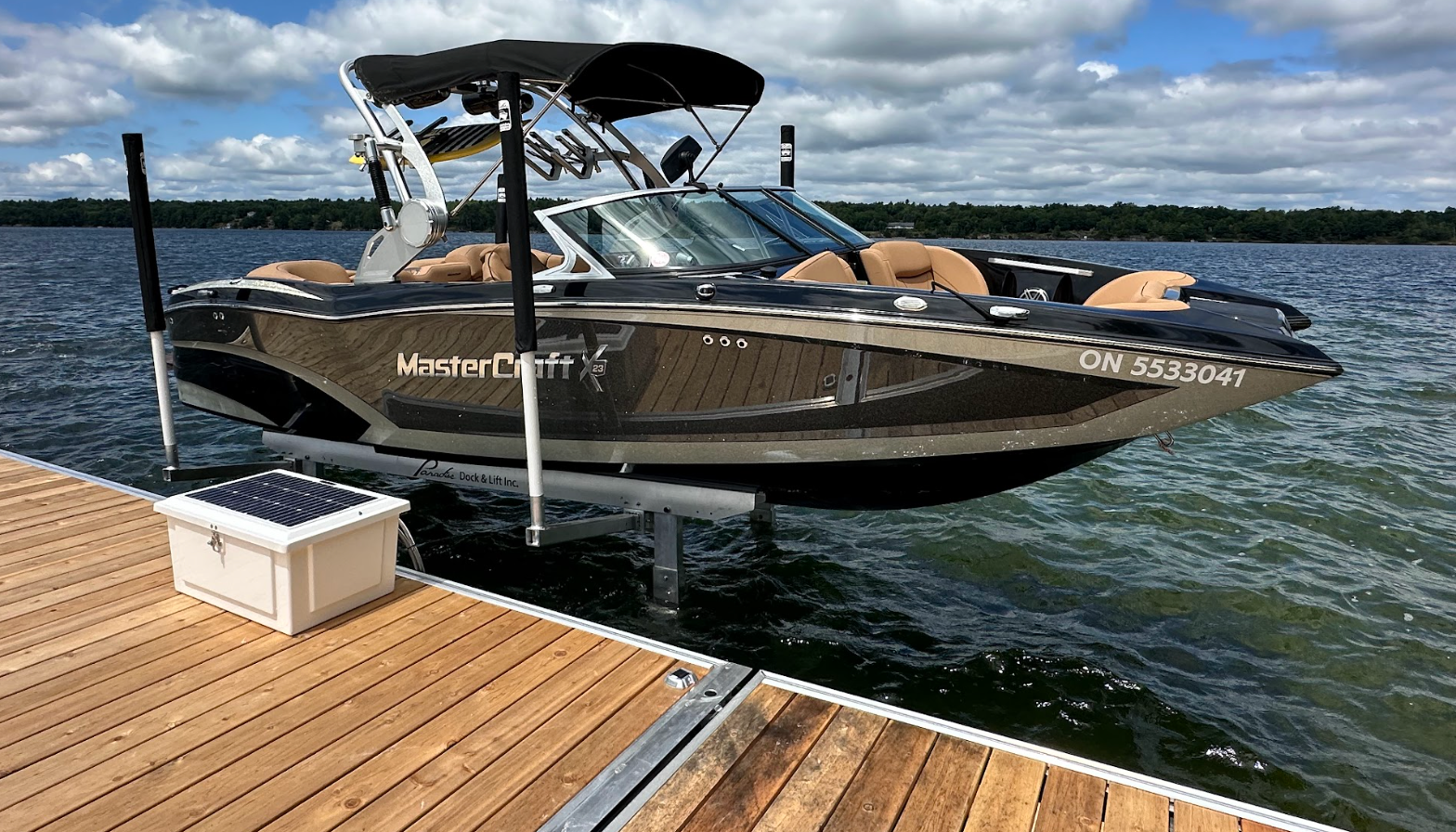
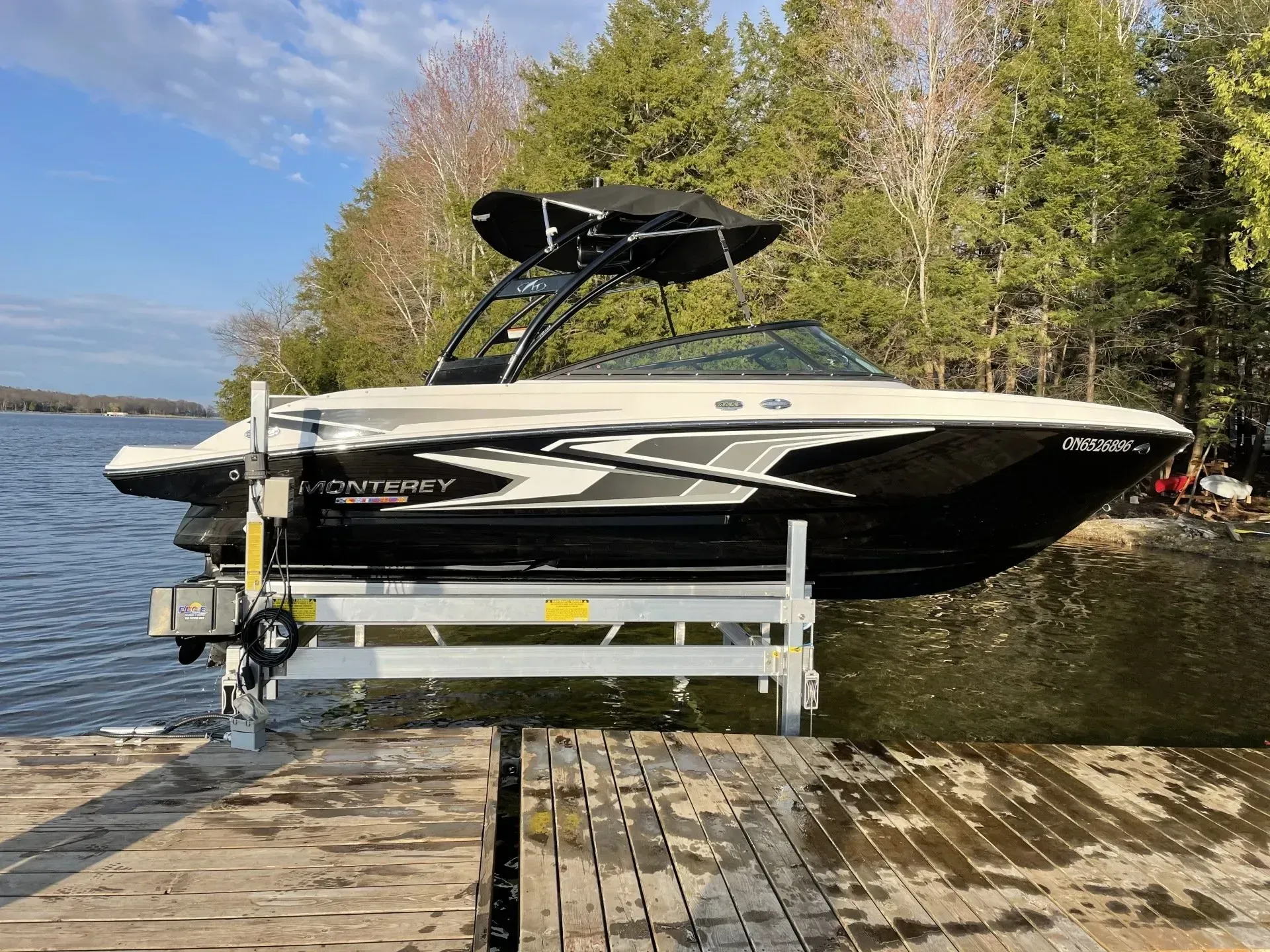
A boat lift is set up for a certain depth of water. As levels fall, there is less water to float your boat on and off, and a lift positioned perfectly in June can feel shallow by October.
A few things help:
- Check clearance before your last trips of the season. If the hull is getting close to the cradle or the bottom, it is time to adjust or take the boat out. Our guide on when to take your boat out of the water walks through timing.
- Choose a lift that adjusts easily. FLOE vertical lifts level with a socket on a drill, with no pins, nuts or bolts to fight with.
- Consider a floating port for PWCs and smaller boats. Wave Armor drive-on ports float, so they move with the water instead of fighting it.
Do Not Forget About Spring
The drawdown is only half the story. Parks Canada aims to have the lakes full heading into navigation season, and on Big Rideau that can mean higher than expected water just as cottages are opening.
A dock that only works at one water level will frustrate you twice a year. The goal is a setup that is comfortable at your lowest fall level and still safe and usable at your highest spring level.
Planning a New Dock? Start With Your Water
Before picking a dock style, it helps to know your shoreline through a full year:
- How much does the water at your dock change between June and late October?
- How far out do you need to go for usable depth at the lowest point?
- Is your shoreline tucked into a bay or open to the main lake?
- Will the dock come out each fall, or stay in?
One more thing to know: all work on, under or over the bed of the Rideau Canal's lakes and rivers needs a permit from Parks Canada, and that includes docks. Superior Systems can help you understand what applies to your property before you commit to a design.
Talk to a Team That Works the Rideau Every Season
Superior Systems has been building and installing docks since 1999, and our showroom sits in Portland, right in the Rideau Lakes. We work on these lakes through every part of the season, from spring installs in high water to late-season visits as the drawdown sets in.
If your dock or lift has been giving you trouble as the water drops, or you are planning something new for next spring, we would love to help. See how we work across the area on our Rideau Lakes docks and boat lifts page, visit the Portland showroom, or request a quote.