Docks for Shallow Water: What Works When Your Bay Is Knee-Deep
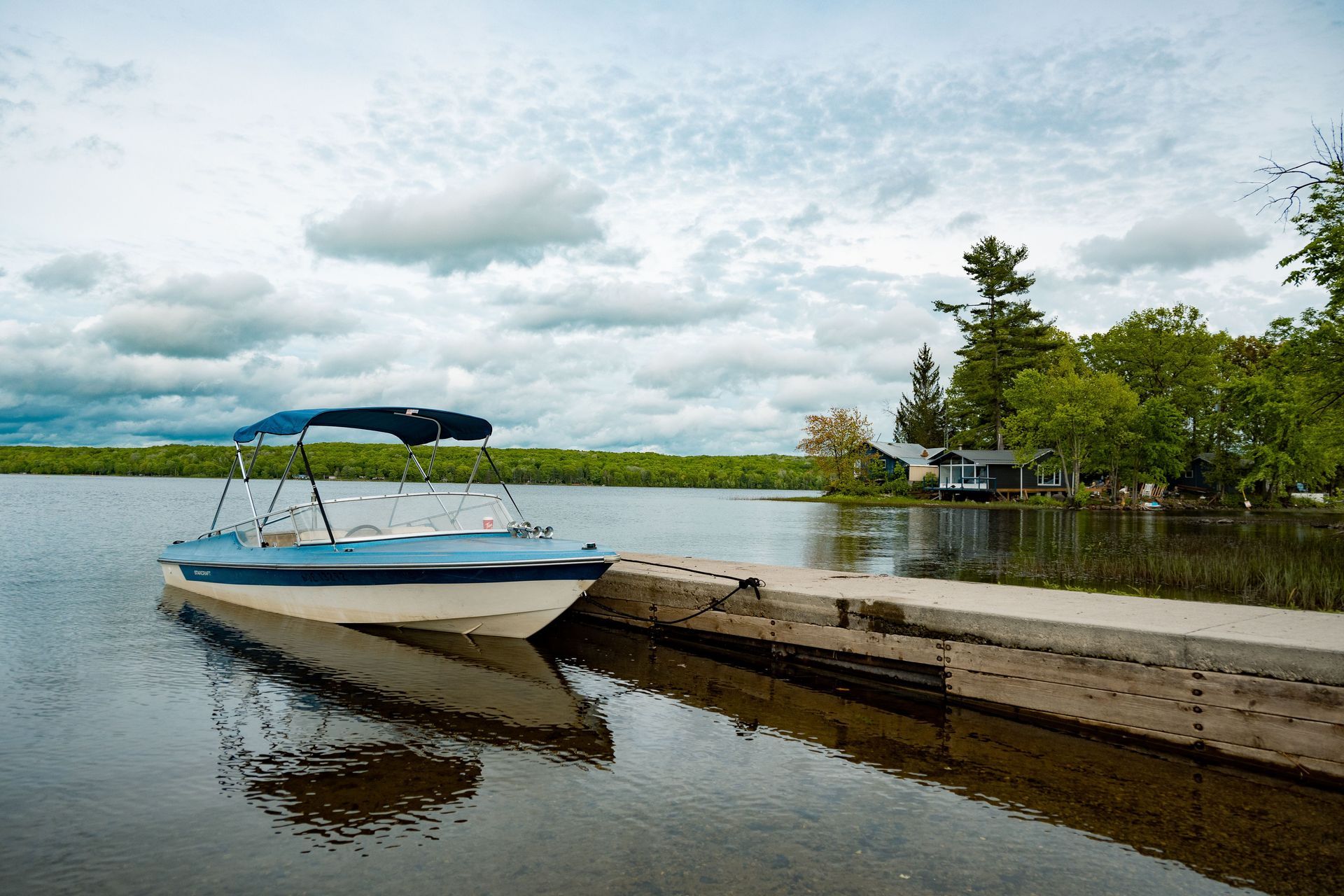
Some of the prettiest cottage lots in Eastern Ontario sit on quiet, sheltered bays. Warm water, herons in the reeds, calm mornings for a coffee on the dock. The catch is that many of those bays are shallow, and by August they can be thick with weeds.
A shallow bay does not rule out a great dock. It just needs a different plan than a lot with deep water off the rock. Here is what works, what to avoid and how to get your boat to water it can actually use.
Why So Many Local Bays Run Shallow
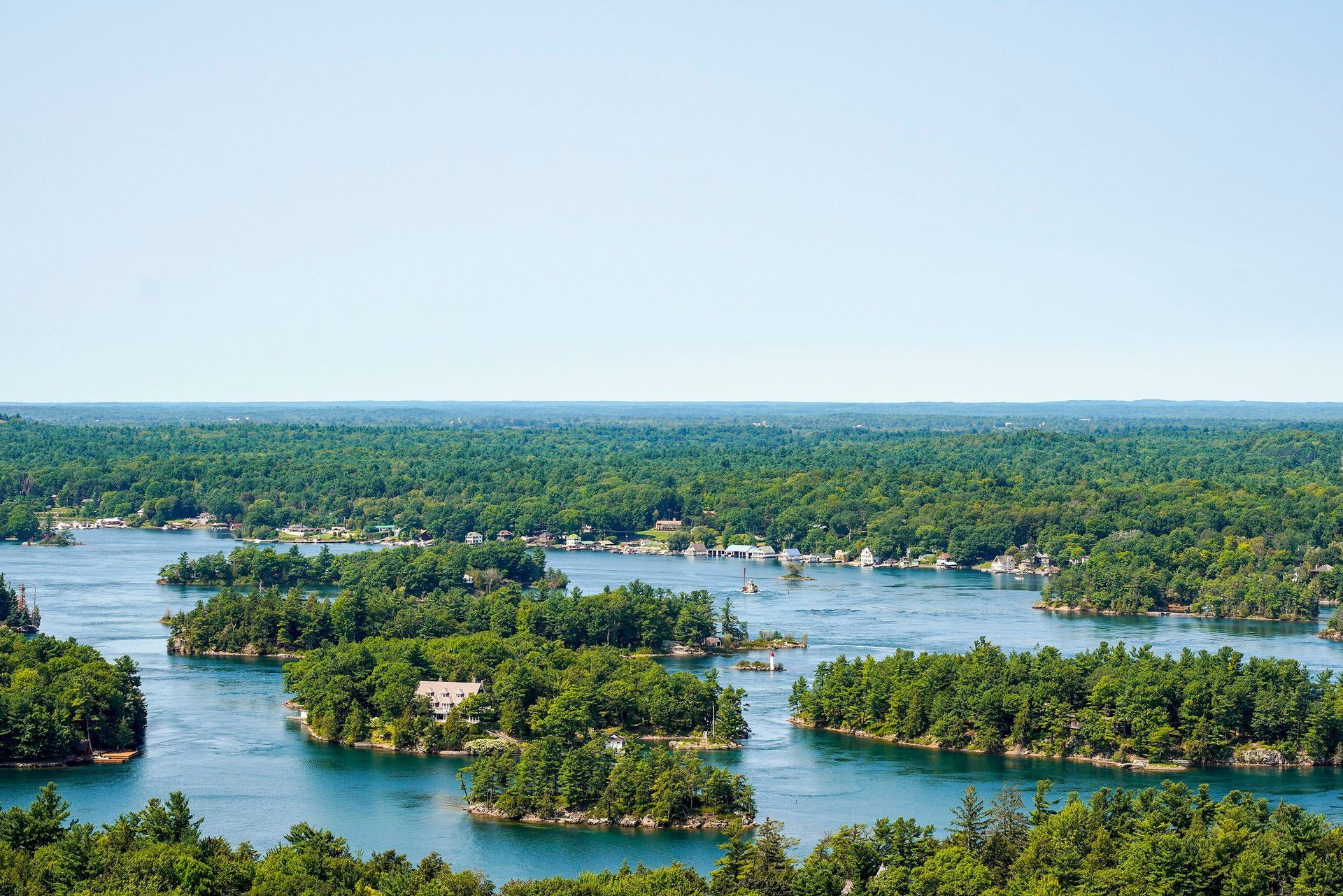
On the Rideau Canal, the shallows are partly a product of history. When the canal dams went in during the early 1830s, they raised lakes like Opinicon and Indian by several metres and created others, like Whitefish and Cranberry Lake, from flooded forest and marsh. Many bays that are pleasant and shallow today were dry land two centuries ago.
Shallow, sheltered water also grows weeds. Across the Rideau lakes, aquatic plants are found in nearly all the sheltered water less than about 12 feet deep. Then in the fall, canal levels drop and shallow bays get shallower still. Our post on the Rideau Lakes drawdown covers what that drop means for your dock and lift.
The Problems Shallow Water Causes
- Floats that touch bottom. A floating dock needs enough water under its floats all season. In a shallow bay, the low-water weeks of late summer and fall can leave it resting on the bottom.
- A boat that cannot get close. Weeds and a soft bottom near shore are hard on props, so the boat needs to reach deeper water at the end of the dock.
- Ice near shore. Shallow water freezes solid sooner, and ice can grip anything left standing in it.
- A swim area full of weeds. Nobody wants to wade through the bay to reach clear water.
The Docks That Work
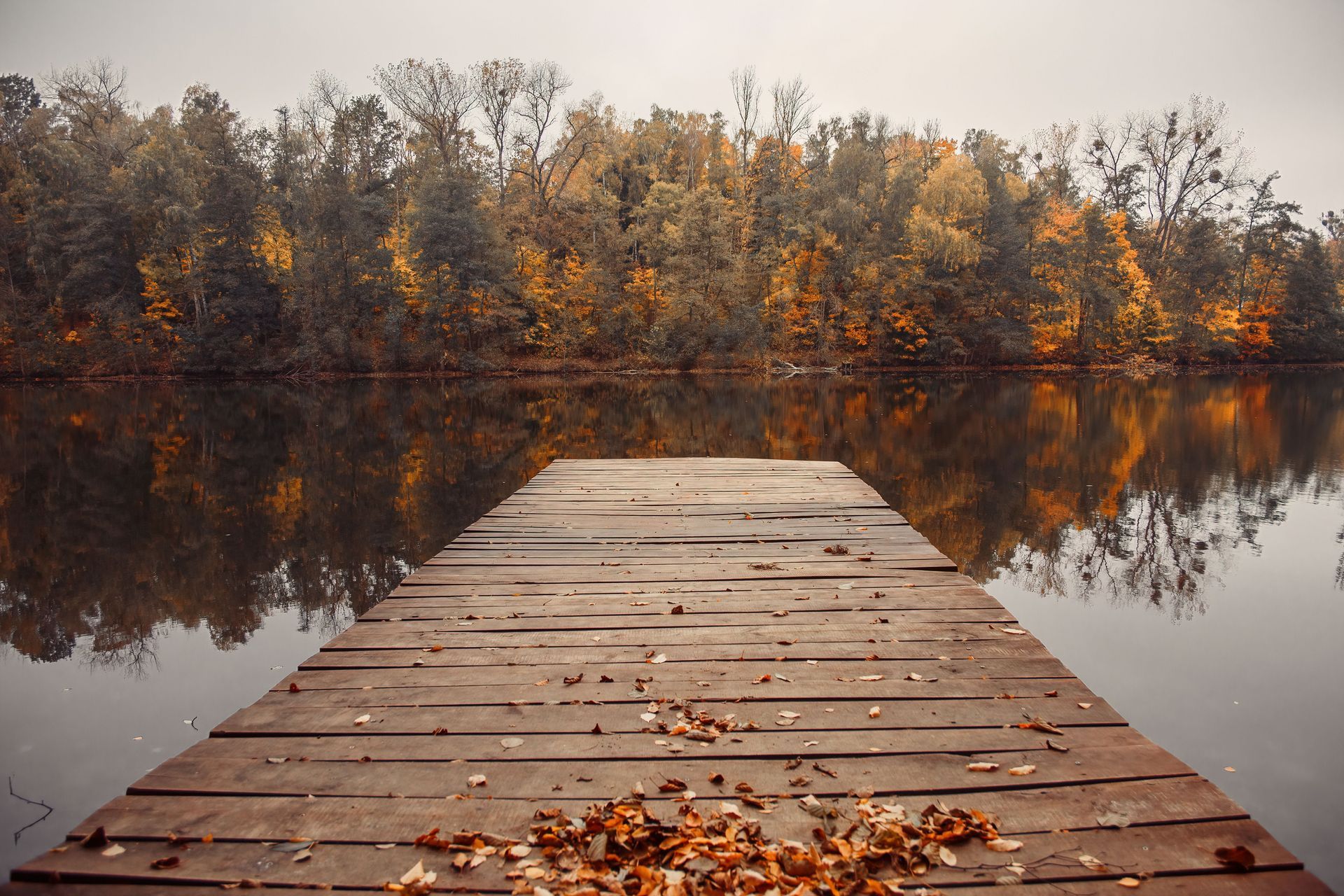
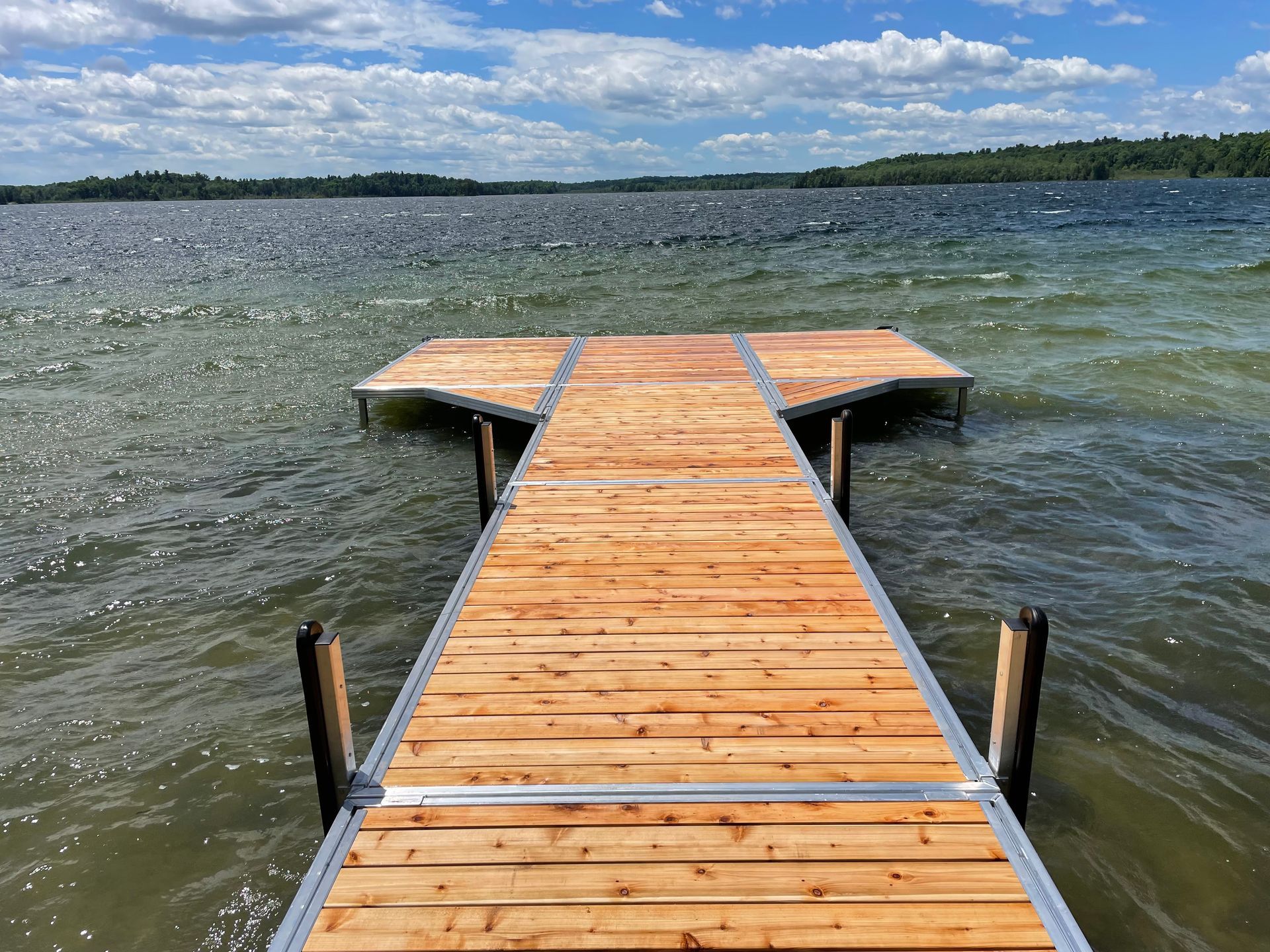
Pole docks. These are the go-to for shallow water. Our pole docks are designed for water under six feet, with welded marine-grade aluminum frames. Every leg adjusts on its own with a 3/4-inch ratchet or wrench, so the dock sits level over an uneven bottom. Sections are modular, so you can build a straight run, an L, a T or a U.
FLOE docks. FLOE's sectional docks use Easy-Level legs that adjust from the top, so you can level the dock without wading in. FLOE's roll-in docks are the easiest of their docks to install and remove. See the FLOE dock lineup.
Tower lift docks. If ice is a concern, a tower lift dock lets you winch the frame up out of the water for winter. It can be extended with pole sections, a ramp or a floating section to reach deeper water.
Go Longer, Not Deeper
When the water near shore is too shallow, the first instinct is often to dig it out. Dredging is usually the wrong answer. Fisheries and Oceans Canada advises against in-water dredging because it can harm fish and their habitat, and on the Rideau Canal any work on the lakebed needs Parks Canada approval.
The better option is to let the dock do the reaching. A run of pole dock sections can carry you across the shallows to usable depth. Once the water is deeper than about six feet, a floating section at the end can give you a stable platform for swimming and tying up.
Lifting the Boat in Shallow Water
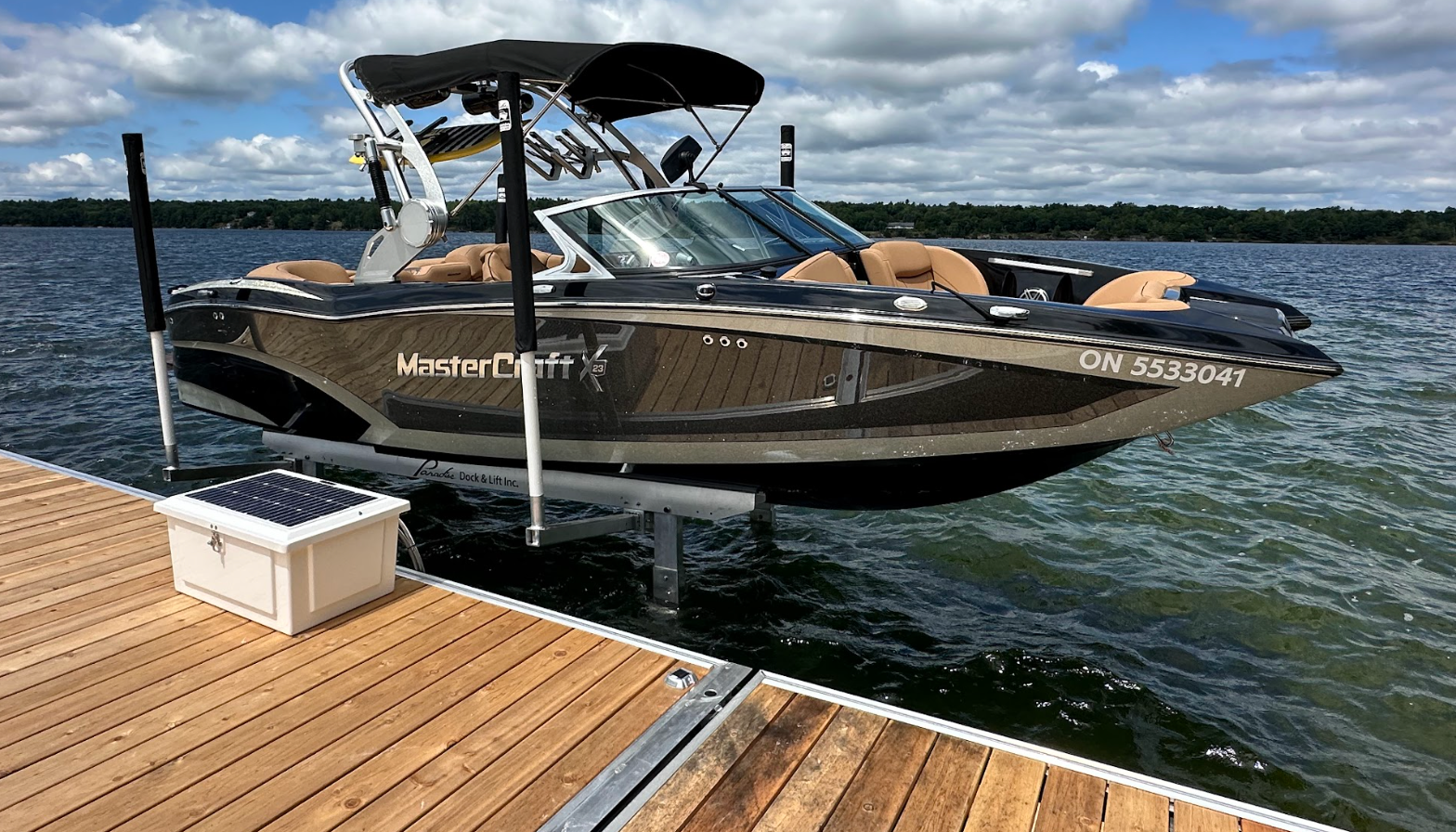
- Cantilever lifts. Our cantilever lifts are made for shallow water. They carry PWCs and aluminum fishing boats up to 1,300 lbs, with 18 inches of leg adjustment to suit the bottom.
- FLOE vertical lifts. FLOE builds its vertical lifts to work in shallower water than most competitors, and they carry a 15-year limited warranty.
For help sizing the lift to your boat, read How to Choose the Right Boat Lift for Your Boat and Waterfront.
What About the Weeds?
It is tempting to clear the whole bay. Before you do, check the rules. On the Rideau Canal, Parks Canada will review a permit to remove submerged weeds, but emergent plants like cattails, bulrushes, pickerel weed and pond lilies cannot be removed. Off the canal, ask your conservation authority first.
In most bays, the simplest fix is a dock that reaches past the weed line. For more on managing plants around your shoreline, see Aquatic Weed Control in Ontario.
A Quick Shallow-Water Checklist
- Measure in the fall. Depths taken at low water show you the worst case.
- Find where the weeds stop. That is often where the dock should end.
- Know your boat. Its draft and weight decide the lift and how far out it needs to sit.
- Plan for winter. Decide early if the dock comes out or lifts up.
- Check the permit picture. On the canal, every dock needs Parks Canada approval, seasonal ones included.
Let's Plan Your Shallow-Water Dock
Superior Systems has been building docks for Eastern Ontario waterfronts since 1999, from deep Shield lakes to the quiet, weedy bays of the southern Rideau. See how we work on the lakes from Chaffey's Lock to Seeley's Bay, visit the Portland showroom or request a quote.