
Docks on the St. Lawrence and Lake Ontario: Planning for Wind, Wakes and Water Levels
A waterfront on the St. Lawrence or Lake Ontario comes with some of the best views in the province. Freighters gliding past. Sunsets over open water. Granite islands scattered all the way from Kingston to Brockville.
It also comes with conditions that a quiet inland lake never sees. Big water asks more of a dock, and planning for it up front is the difference between a dock you enjoy and one you worry about every time the wind picks up.
Big Water Is a Different Kind of Waterfront
Inland lakes have their moods, but the St. Lawrence, the Bay of Quinte and the shores of Lake Ontario bring a few extra forces into play:
- Wind and waves. Open stretches of water give wind room to build real waves before they reach your shore.
- Boat wakes. Busy channels in the Thousand Islands see everything from runabouts to large cruisers and tour boats, and their wakes keep coming long after the boat has passed.
- Current. The St. Lawrence is a river, and some waterfronts feel steady current that pushes on a dock all season.
- Ice. Moving water and shifting ice can be hard on anything left in place over winter.
None of these are reasons to avoid a dock. They are reasons to choose one built for the job.
Water Levels You Do Not Control
Lake Ontario and the upper St. Lawrence are regulated by an international plan. Plan 2014 sets how much water flows out of Lake Ontario through the Moses-Saunders Dam near Cornwall.
Regulation helps, but it cannot prevent every high-water year. Record water levels in 2017 and 2019 caused substantial shoreline damage across Lake Ontario and the St. Lawrence. When inflows are extremely high because of weather, flooding cannot be avoided by any outflow plan.
For waterfront owners, the lesson is simple: plan your dock for the water you might get, not just the water you have this summer.
Choosing a Dock for Big Water
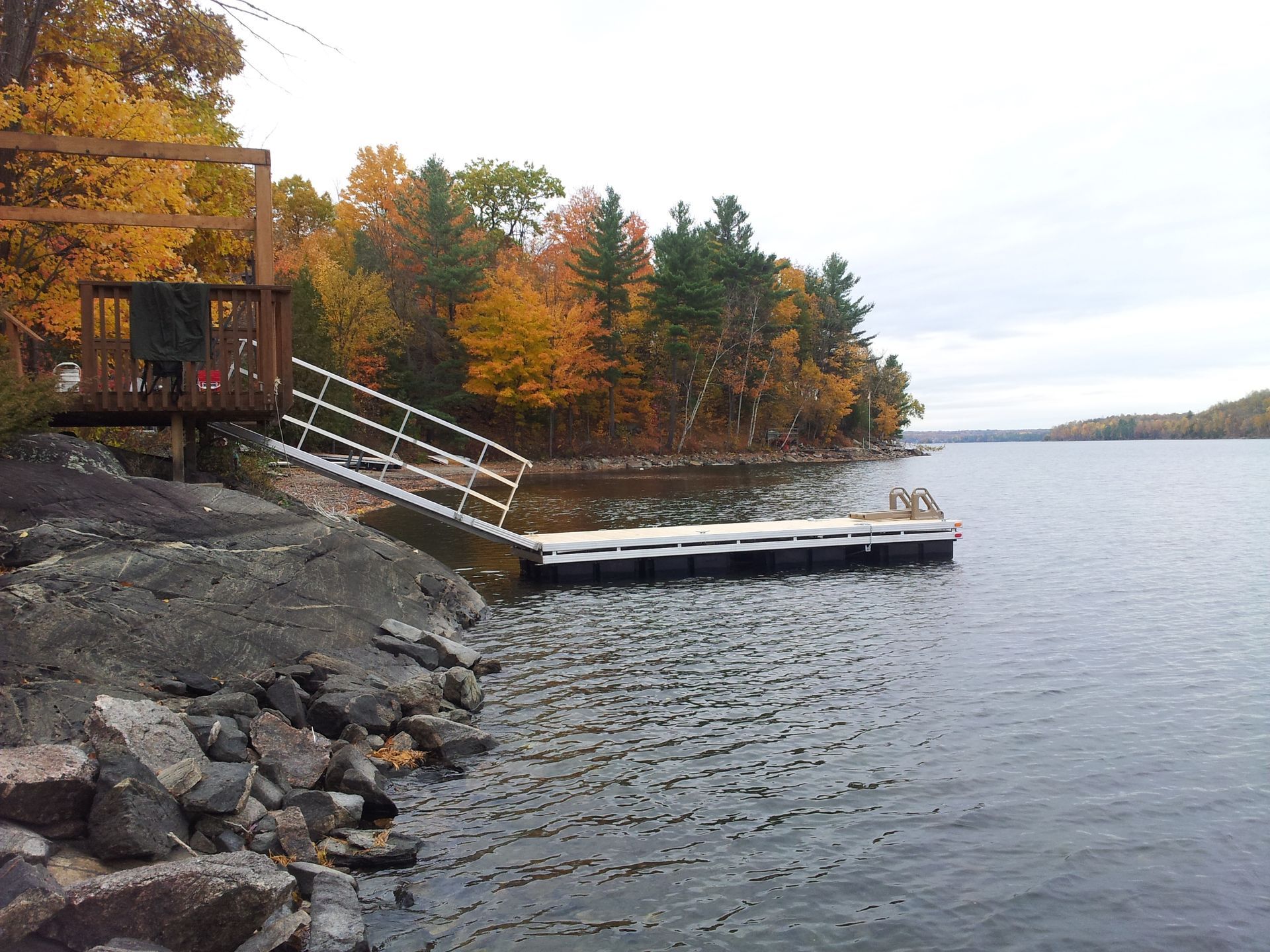
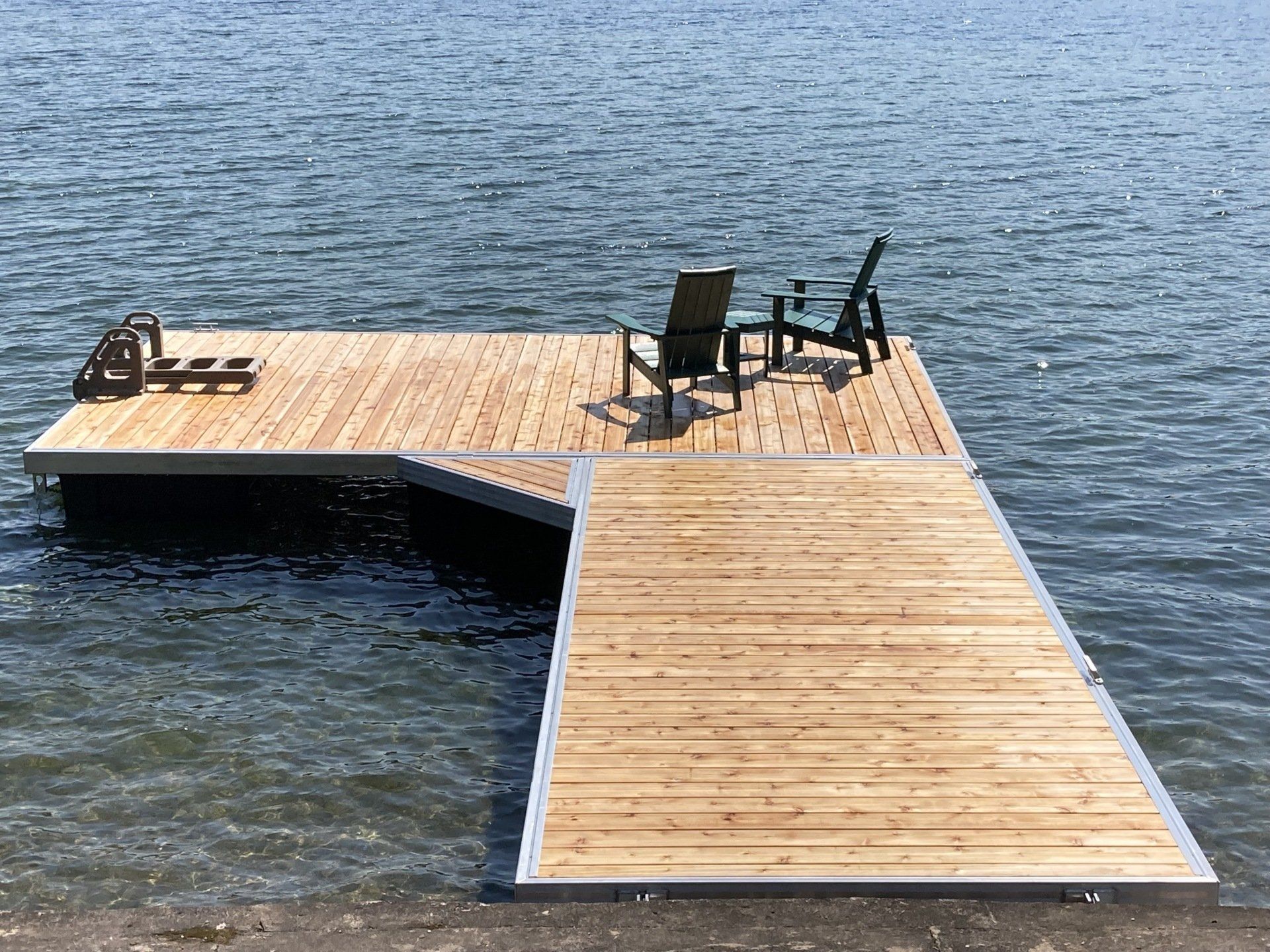
Floating docks are often the best match for St. Lawrence and Lake Ontario shorelines. They rise and fall with the water, so a high-water year does not put the deck under the surface, and a low-water year does not leave it stranded above. Superior Systems floating docks use 6" aluminum side rails built for strength and longevity. See our floating docks.
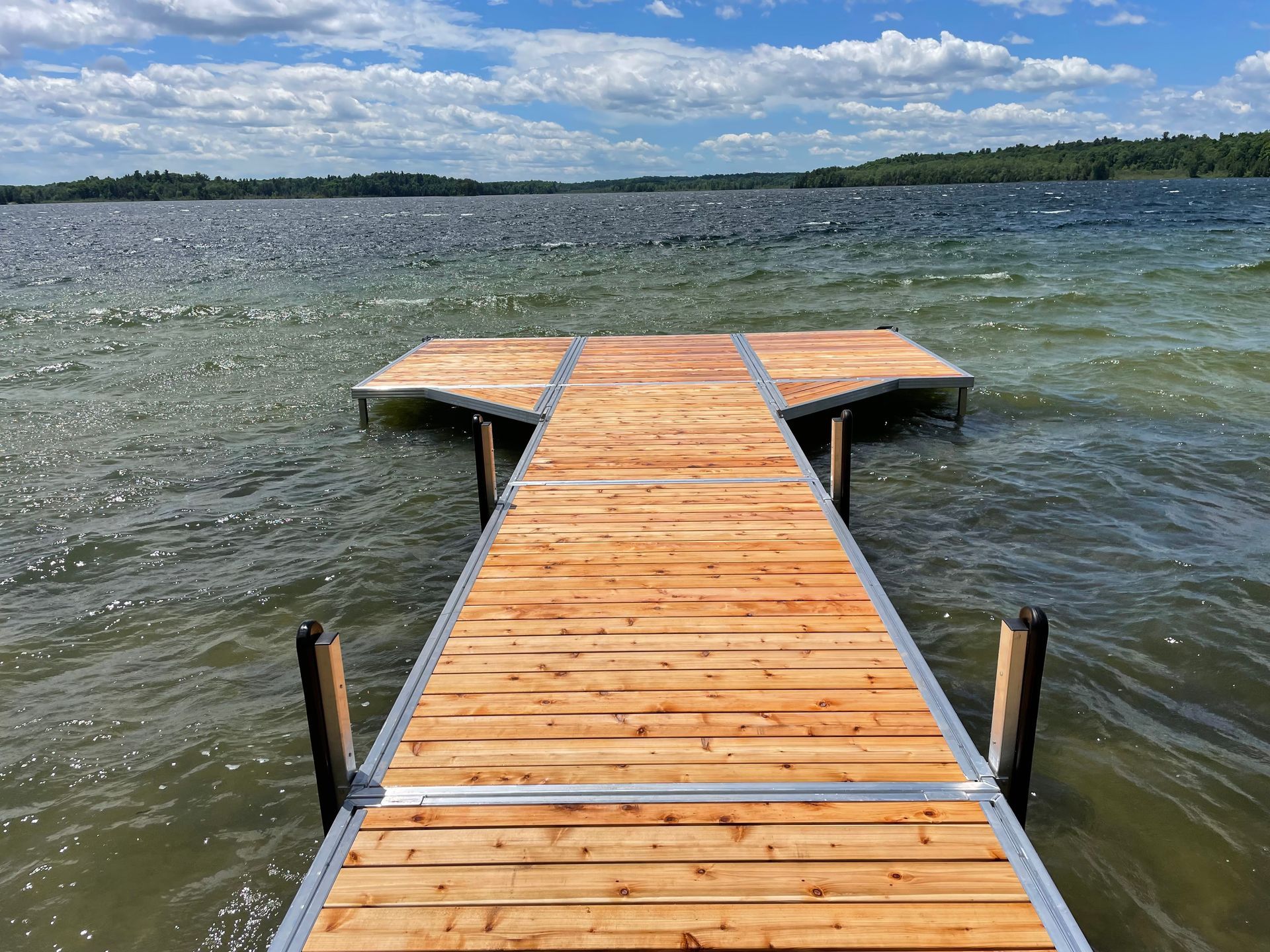
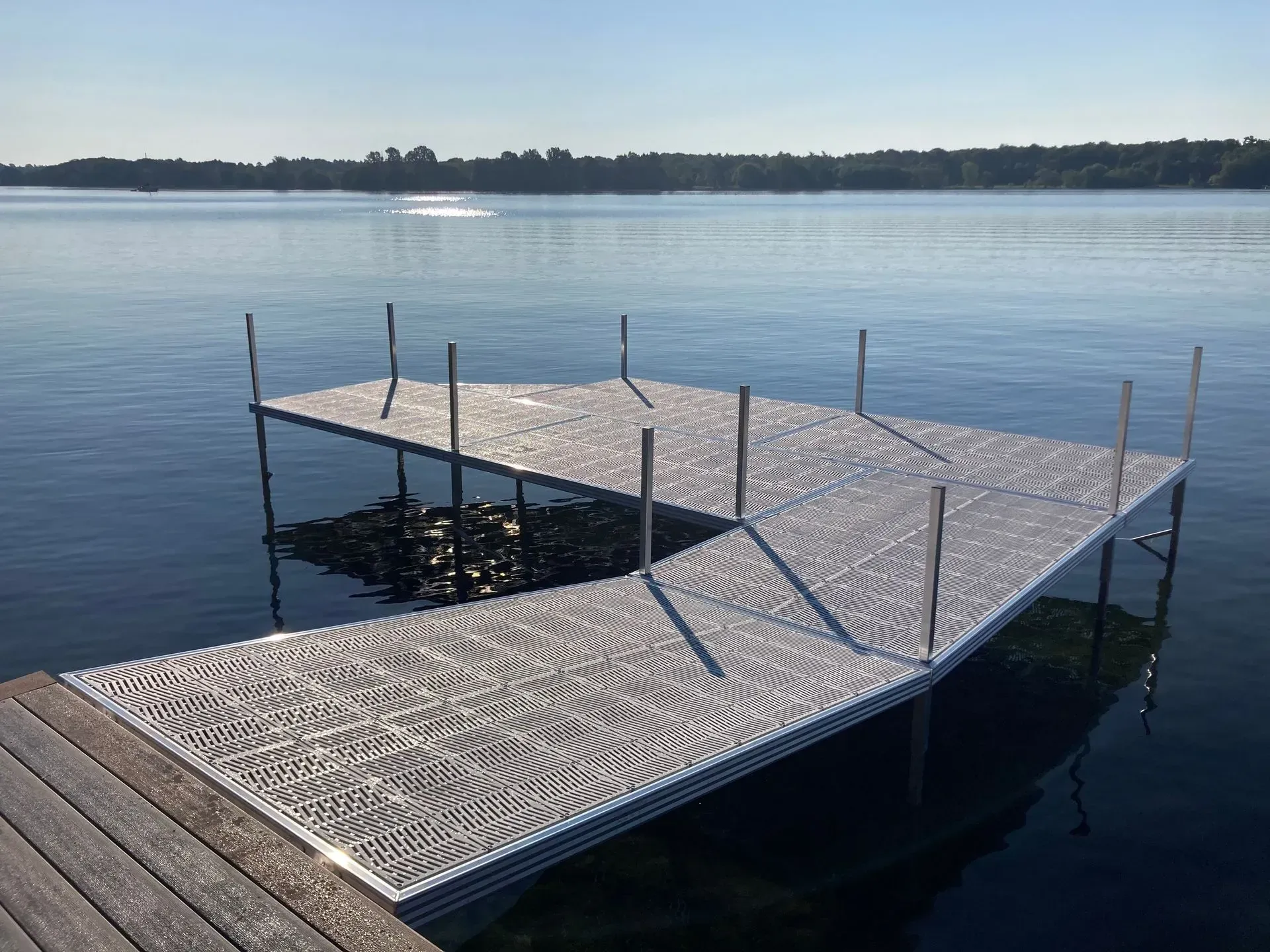
Wave Armor docks are modular, so sections can be arranged into almost any layout. That flexibility helps when you want a breakwater-style L or T shape that gives boats a calmer side to tie up on. Explore Wave Armor docks.
Anchoring matters as much as the dock. On big water, how a floating dock is held in place is just as important as the dock itself. Anchoring has to account for current, wave direction and the full range of water levels you could see.
Docks built properly for open water hold up. One Superior Systems customer on Lake Huron rode out a major storm on the Bruce Peninsula, and the dock did not move an inch.
Protecting Your Boat From Wakes and Waves
A boat tied to a dock in a busy channel takes a beating from wakes all summer. Getting it out of the water when you are not using it protects the hull and saves wear on lines and fenders.
- Drive-on ports. Wave Armor ports for PWCs, boats and pontoons float with the water and let you drive on and roll off. They are rotomolded and foam-filled for durability.
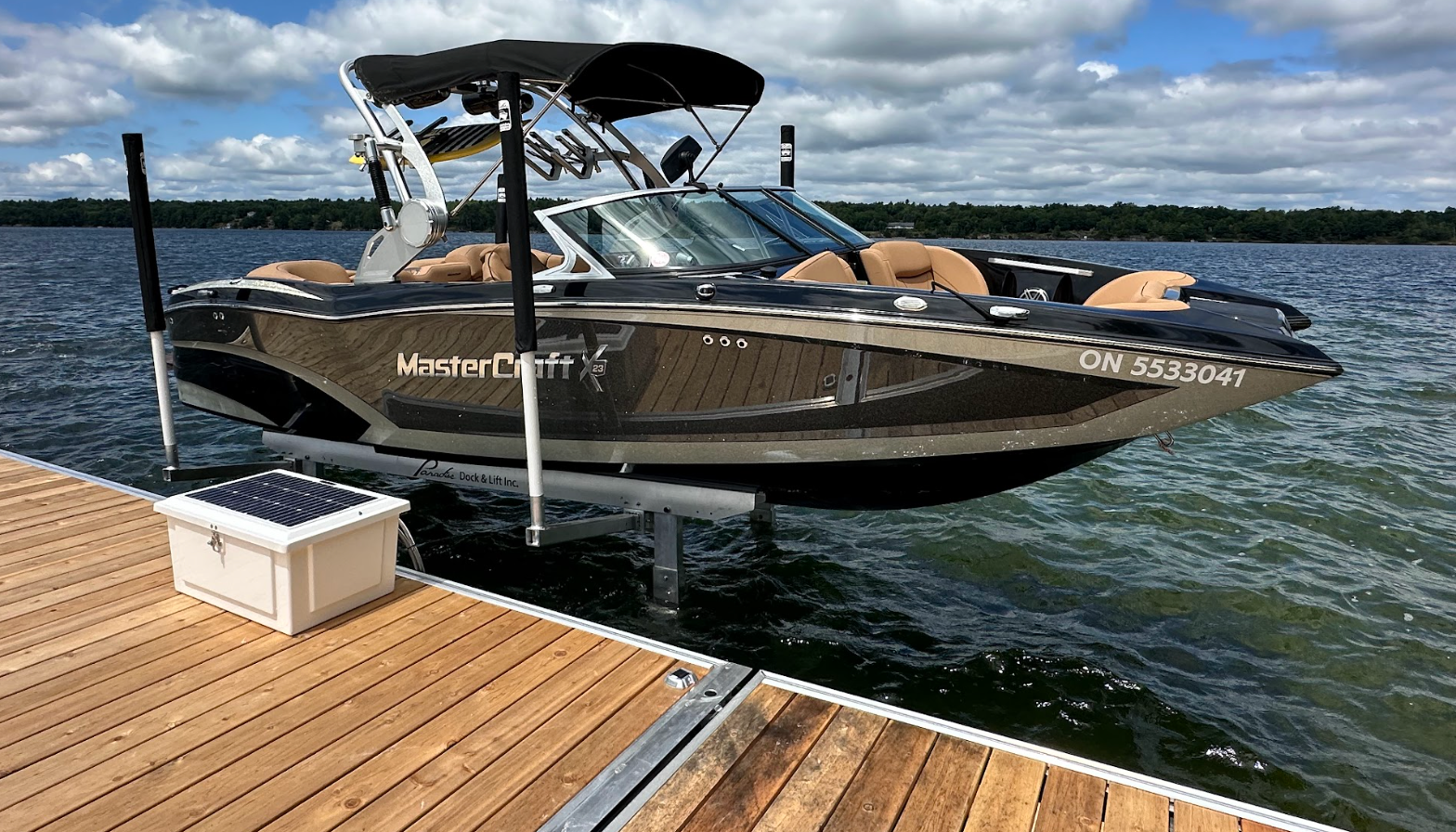
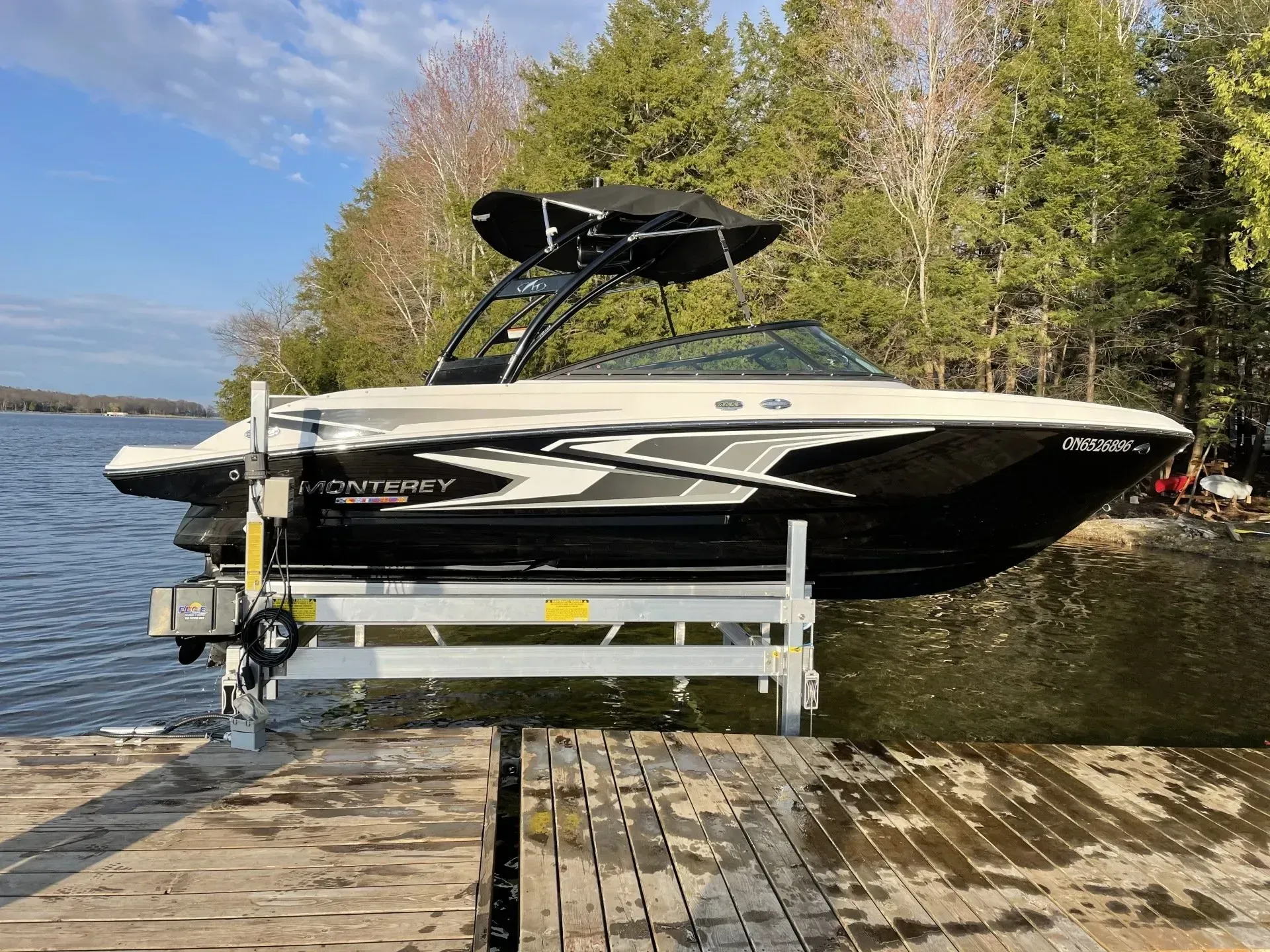
- Hydraulic lifts. Paradise hydraulic boat lifts suit larger boats, with capacities up to 13,000 lbs, lifting ranges of 4 to 6 feet and solar charging. An overcentre lock holds the lift in the fully raised position.
Our guide on choosing the right boat lift goes deeper on matching a lift to your boat and shoreline.
Plan for Fall Removal
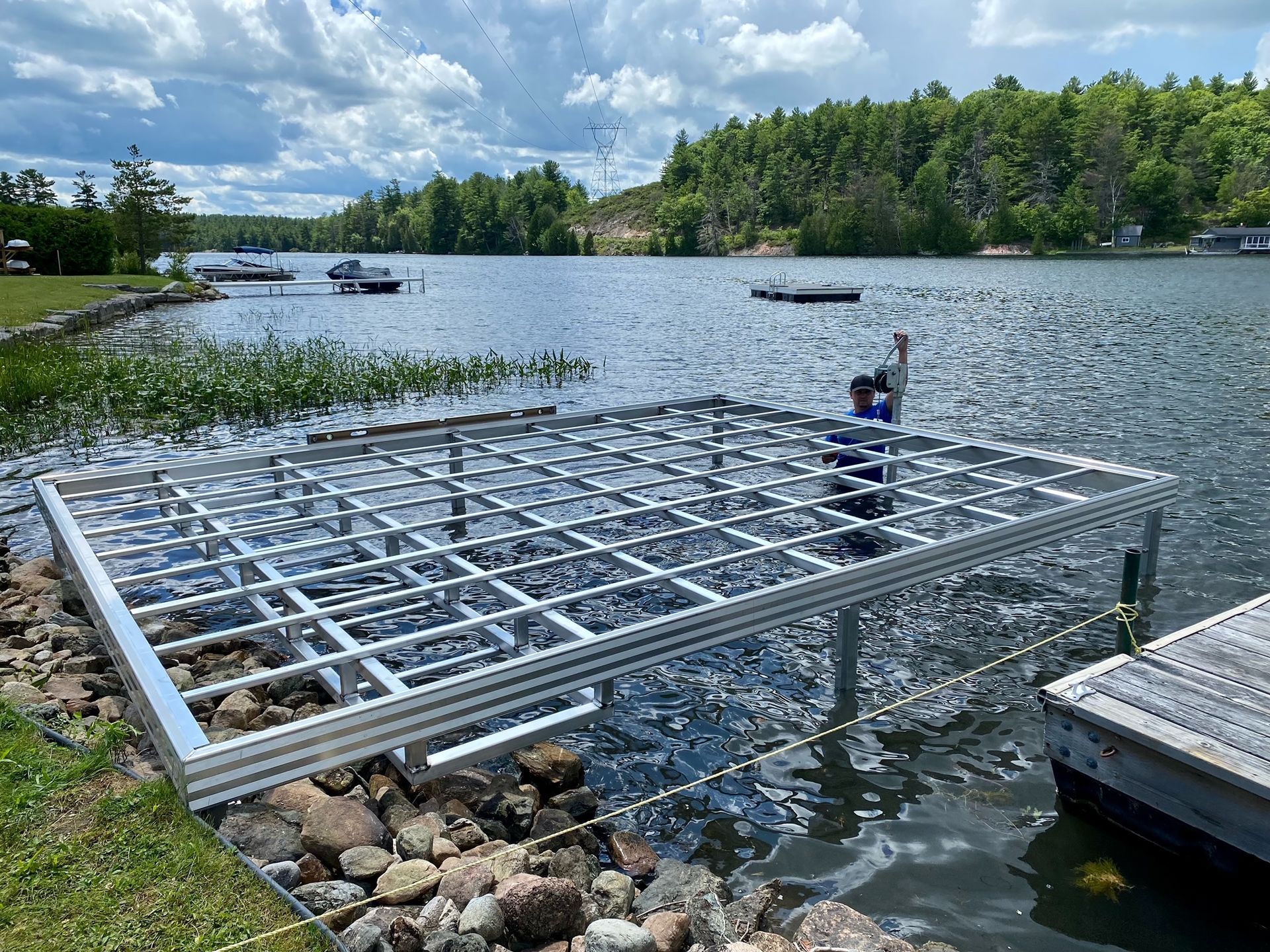
On fast-moving water, being able to take the dock out completely each fall can matter more than anything else, especially on lots with no room to store it on shore. One owner on Picton Bay in Prince Edward County went through two docks before finding a system from Superior Systems that she could install and remove herself.
If your dock has to come out each fall, make removal part of the design from day one.
Think About Weight and Use
Big-water docks often carry more: larger boats, more guests, more gear. Our post on how much weight a dock can hold explains how flotation, size and load affect what your dock can safely support.
As with any shoreline project, check with your local conservation authority and township before you build, since shoreline and in-water work rules vary by area.
Plan Your Big-Water Dock With Superior Systems
Superior Systems has been building docks for Ontario waterfronts since 1999, from sheltered Rideau bays to open water on Lake Ontario and Lake Huron. We will look at your exposure, your water and the way you use your waterfront, then recommend a system that holds up to it.
Visit the Portland showroom or request a quote.