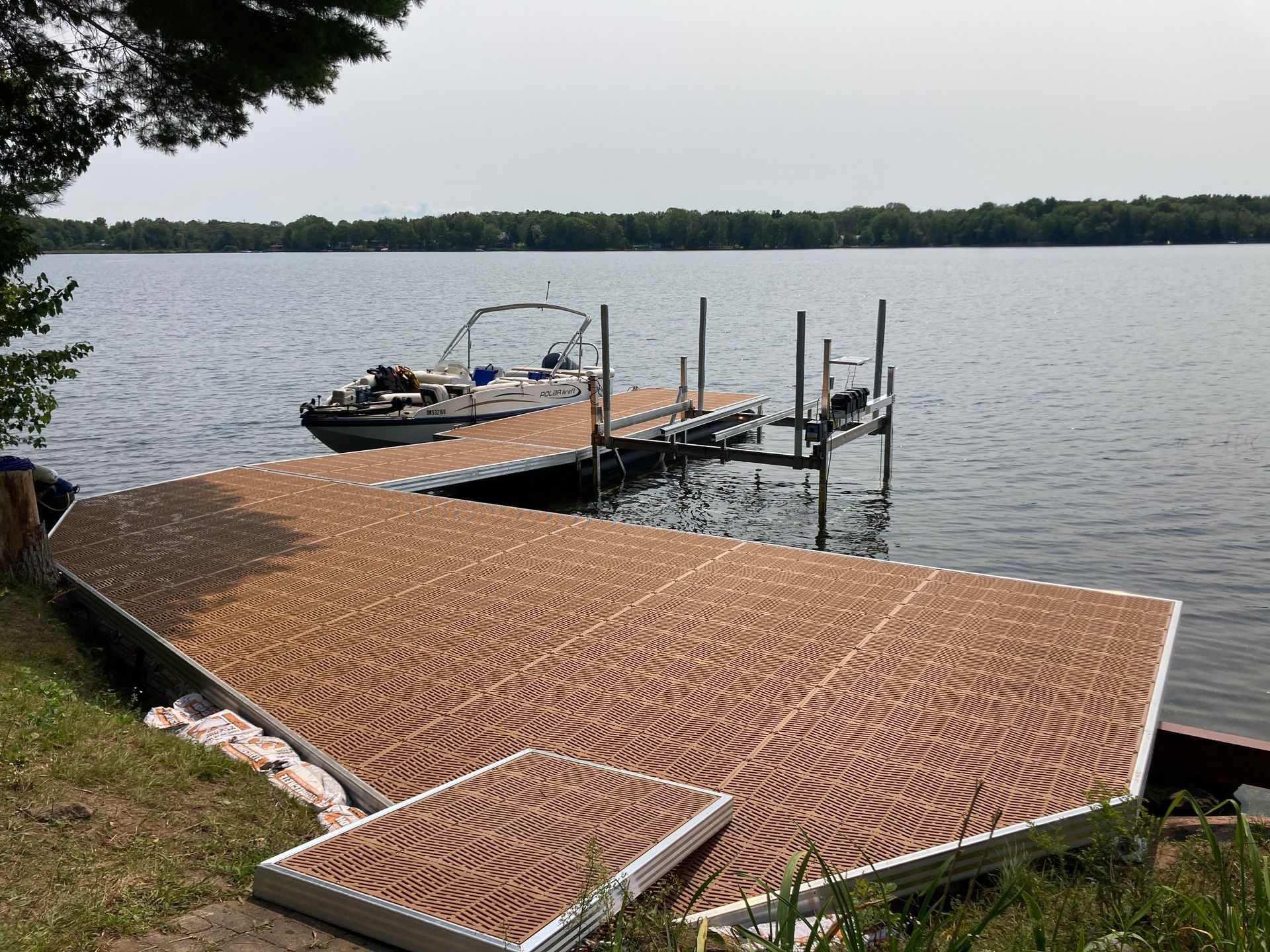

Why Is My Dock Sinking? Common Causes and Solutions
A dock that sits lower in the water than it used to can be concerning. Maybe one corner has started to dip, sections feel uneven underfoot, or the dock simply doesn't seem as stable as it once did.
The good news is that a sinking dock doesn't always mean it's time for a replacement. In many cases, the problem can be traced back to a specific issue that's relatively straightforward to address. Other times, however, sinking is a sign of more significant structural deterioration that shouldn't be ignored.
Understanding what's causing the problem is the first step toward protecting both your dock and your waterfront investment.
1. Waterlogged or Damaged Floats
For floating docks, damaged flotation is one of the most common causes of sinking.
Over time, floats can become cracked or punctured due to impacts, harsh winter conditions, or years of exposure to the elements. Once water begins entering the flotation, buoyancy decreases, causing sections of the dock to sit noticeably lower than the rest.
Signs of damaged flotation include:
- One section sitting lower than others
- The dock becoming increasingly uneven
- Excessive movement under normal use
- Visible cracks or damage to float components
If caught early, replacing damaged floats may restore the dock's performance without replacing the entire structure.
2. Too Much Weight Has Been Added
Docks are designed to support a specific amount of weight.
Over the years, it's easy for additional items to accumulate:
- Storage boxes
- Benches
- Heavy patio furniture
- Large coolers
- Personal watercraft
- Construction materials during renovations
While each item may seem insignificant on its own, the combined weight can eventually exceed what the dock was designed to support.
If the dock appears to sink only in certain areas, uneven weight distribution may also be contributing to the problem.
3. Aging Hardware and Structural Components
Not every sinking dock problem begins with the flotation.
Bolts loosen. Brackets corrode. Connections weaken. Framing can gradually deteriorate after years of seasonal expansion, contraction, ice movement, and daily use.
When these structural components begin to fail, the dock may no longer distribute weight evenly, causing sections to settle lower than others.
The Government of Canada's guidance on boathouses, docks, and moorings emphasizes the importance of regular inspection and maintenance of waterfront structures to help identify deterioration before it becomes a larger issue.
4. Winter Ice Has Taken Its Toll
Ontario winters can be surprisingly hard on docks.
Ice doesn't simply freeze around a dock- it expands, shifts, and moves throughout the season. As temperatures fluctuate, pressure from moving ice can bend framing, loosen hardware, damage flotation, or shift support structures.
Sometimes the damage isn't immediately noticeable.
Instead, waterfront owners discover the effects the following spring when the dock sits lower, feels unstable, or no longer lines up the way it once did.
Seasonal inspections before and after winter can help identify these issues before they become more costly to repair.
5. Your Shoreline Has Changed
Sometimes the dock isn't actually the problem.
Changing water depths, shoreline erosion, sediment movement, or shifting lake bottoms can all affect how a dock performs over time.
What worked perfectly when the dock was installed may no longer provide the same level of support years later.
This is one reason why shoreline conditions should always be considered when evaluating dock performance. Waterfront structures interact with constantly changing natural environments, and periodic reassessment helps ensure they continue functioning as intended.
Our floating dock systems are designed to adapt to changing water levels, making them an excellent solution for many Ontario waterfront properties.
6. The Dock Has Simply Reached the End of Its Service Life
Even well-maintained docks have a lifespan.
After decades of exposure to sun, water, storms, and seasonal freeze-thaw cycles, materials naturally begin to wear.
A dock approaching the end of its useful life often shows several symptoms at once:
- Multiple repairs every season
- Widespread corrosion or rot
- Damaged flotation
- Loose framing
- Uneven sections
- Reduced stability
If several of these issues are present simultaneously, replacement may provide better long-term value than continuing to repair individual components.
7. Repair or Replace?
Not every sinking dock needs to be replaced.
If the issue is isolated to a damaged float, loose hardware, or a single structural component, repairs may restore the dock to excellent condition.
However, when sinking is caused by widespread deterioration, repeated seasonal damage, or aging structural components, replacement often becomes the more practical investment.
The Government of Canada's guidance on maintaining in-water structures recommends regular inspections and timely maintenance to help preserve the safety and longevity of waterfront infrastructure.
When evaluating the condition of an aging dock, it helps to look at the structure as a whole rather than focusing on a single damaged area.
Don't Forget About Safety
A dock that's beginning to sink isn't just a maintenance issue—it can also become a safety concern.
Uneven walking surfaces, loose boards, unstable ladders, and shifting sections all increase the risk of slips and falls for family members and guests.
The Lifesaving Society of Canada encourages waterfront property owners to make safety part of every day on the water by identifying hazards before they lead to injuries.
Addressing dock issues early not only helps protect the structure itself but also creates a safer waterfront for everyone using it.
A sinking dock doesn't always mean the end of its lifespan- but it should never be ignored.
Whether the issue is damaged flotation, changing shoreline conditions, aging hardware, or years of accumulated wear, identifying the cause early can often prevent more extensive repairs later.
Regular inspections, routine maintenance, and timely repairs all help extend the life of a dock while keeping it safe and enjoyable throughout the boating season.
When replacement eventually becomes the better option, choosing a dock that's properly matched to your shoreline and waterfront lifestyle helps ensure years of dependable performance.
Superior Systems also offers a variety of dock accessories and dock systems designed to help waterfront owners create a safe, functional, and long-lasting waterfront.