
Building a Dock on a Rocky Shoreline: A Guide for Frontenac Lake Owners
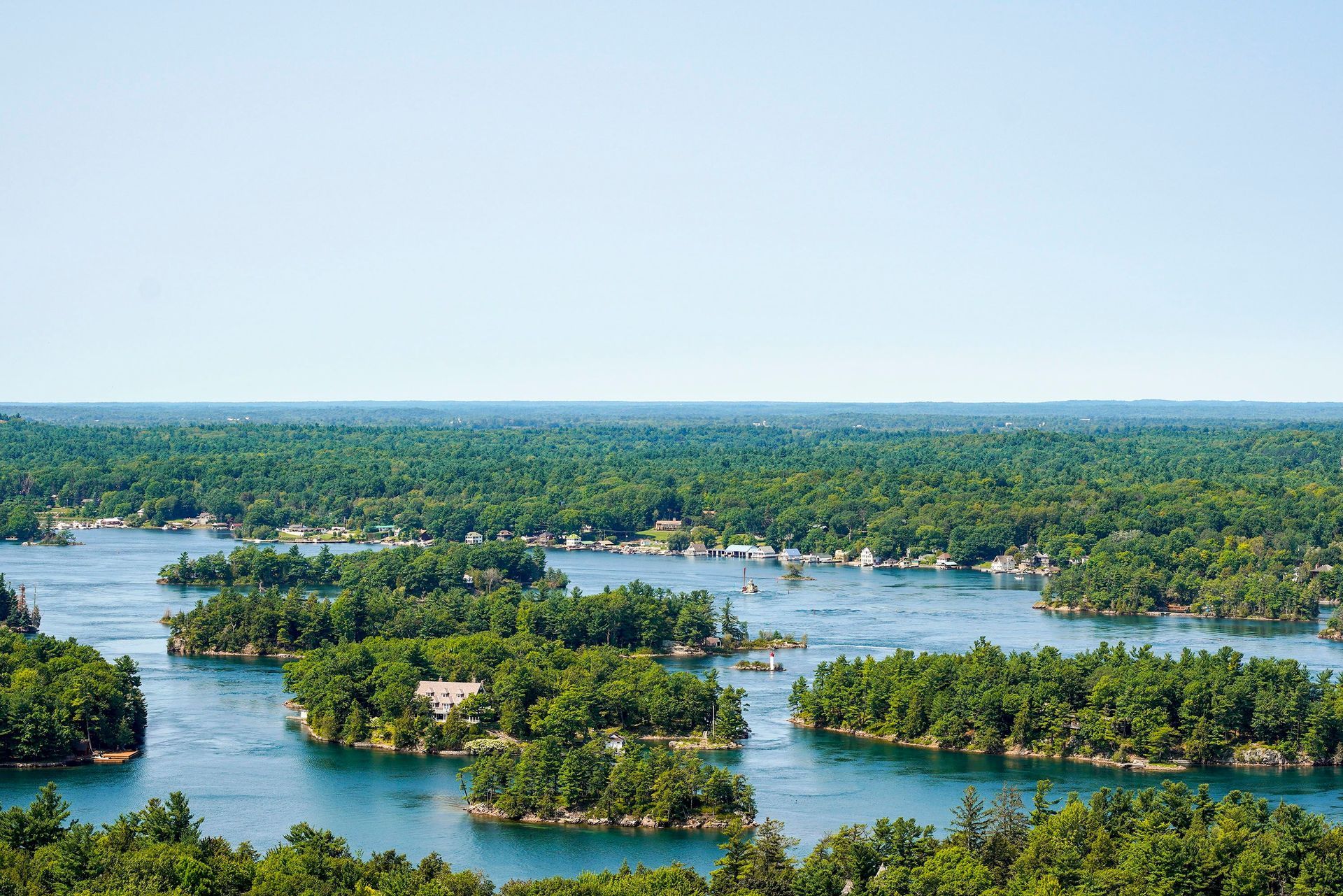
Anyone with a cottage on Loughborough, Sydenham, Crow, Bobs or Sharbot Lake knows the look. Pink and grey rock running right down into the water. Pines clinging to ledges. A shoreline that drops from ankle deep to over your head in a few steps.
It is a big part of why people fall in love with these lakes. It is also why a dock that works perfectly on a sandy beach can struggle here. Rocky shorelines need a dock that is planned around the rock, not one that fights it.
Why Frontenac Shorelines Are Different
Much of the land between Kingston and the Rideau Lakes sits on the Frontenac Arch, a band of ancient granite that links the Canadian Shield to the Adirondack Mountains. The bedrock here is mostly granite, gneiss and marble that is more than a billion years old.
On the waterfront, that geology shows up in a few familiar ways:
- Uneven lakebeds. Rock shelves, boulders and sudden drop-offs, often within the length of a single dock.
- Steep grades. Many lots sit well above the water, with a long walk or a steep path down to shore.
- Little soft bottom. There is often nowhere to drive a post or set a traditional crib without disturbing the shoreline.
- Exposed points. Rocky points tend to catch wind and waves from more than one direction.
Start With What Is Under the Water
Before choosing a dock style, it pays to know the bottom along the whole length of where the dock will go. A few depth checks every couple of metres tell you a lot: where the ledge drops off, where the boulders sit, and how deep the water is at the end where you will be swimming or tying up a boat.
This is also the time to think about water levels. Some Frontenac lakes, including Bobs and Crow Lake, rise and fall noticeably through the year. A dock that suits the rock in July also needs to work in spring high water and fall low water.
Matching the Dock to the Rock
There is no single right answer for a rocky shoreline, but some systems handle it far better than others.
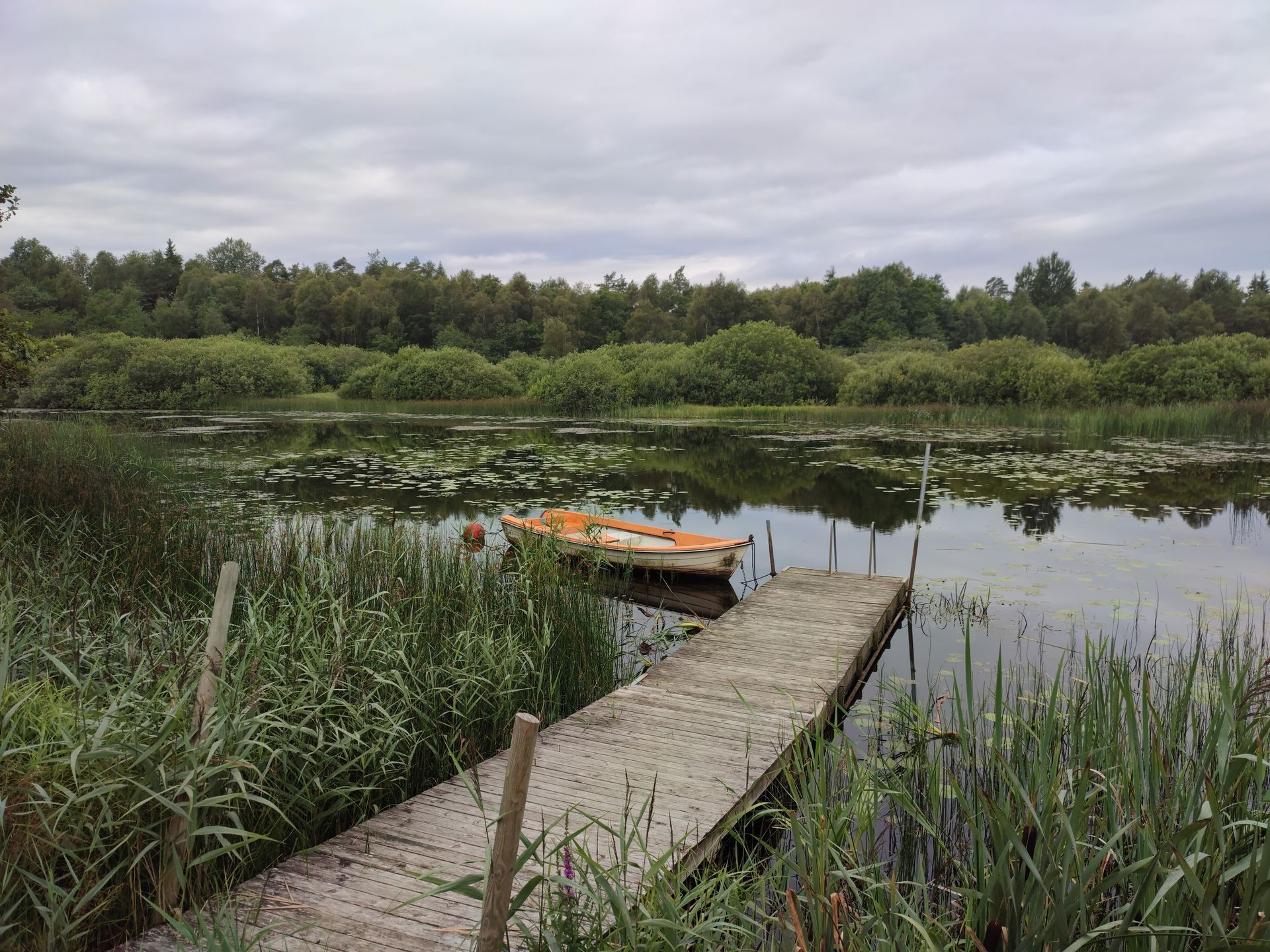
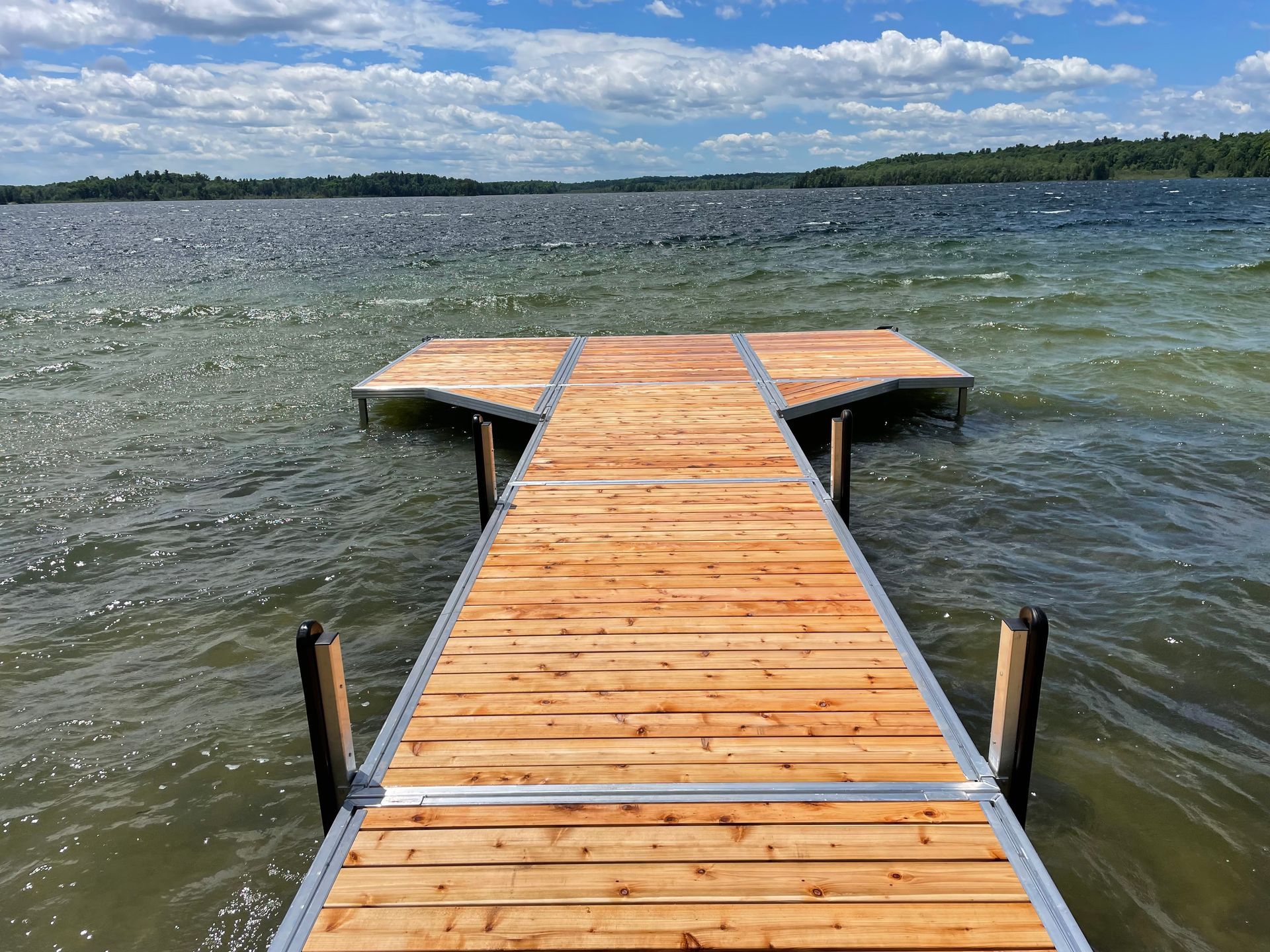
Pole docks are a strong fit for shallow water under six feet. Each leg sits on the bottom on its own, so the dock can follow an uneven lakebed without needing a flat surface. The lightweight design also makes installation and removal quicker on lots with tricky access. See our pole docks.
Tower lift docks take the pole dock idea further. Installations are custom to your shoreline, and at the end of the season the frame lifts out of the water, which keeps it clear of spring ice. One person can handle the setup. Learn more about tower lift docks.
FLOE docks use easy-level legs, so you can fine-tune each leg to the rock below without getting in the water. They come in modular wheel-in or sectional styles for shallow installs. See the FLOE dock lineup.
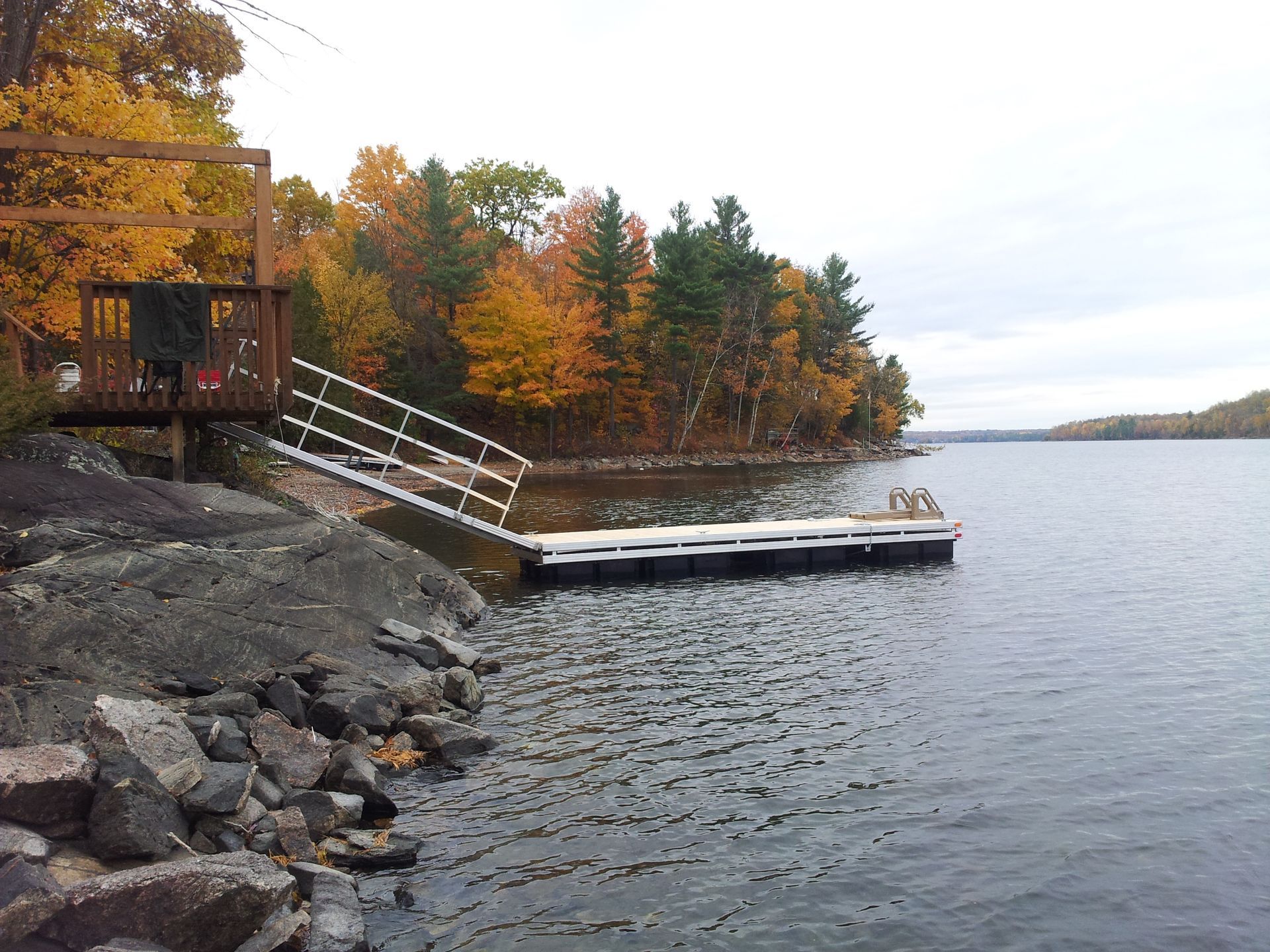
Floating docks come into their own where the shoreline drops away fast or the water level moves a lot. Instead of standing on the rock, the dock floats in deeper water and connects to shore with a ramp. On Crow Lake, one family's floating dock was designed around two old concrete abutments, and now rises and falls with the lake while staying remarkably stable. Learn more about floating docks.
For a closer look at how these styles compare, our post on common residential dock types is a good next read.
Getting From Shore to Dock
On a rocky lot, the trickiest part is often the first few metres. A steep grade or a jagged rock edge between land and dock can make the whole waterfront feel harder to use than it should.
A well-planned ramp or gangway solves most of this. Think about the angle at your lowest and highest water, where handrails would help, and whether a small landing at the top makes the walk down feel steadier. This matters for everyone, and especially for grandparents, young kids and guests who are not used to the rock.
One Superior Systems customer near Mountain Grove had a steep grade down to the lake that ruled out the usual approach. The crew assembled more of the dock right at the water's edge, and the family ended up with a floating dock and matching ramp that made the shoreline easy to use again.
Plan for Installation and Removal
Rocky lots are often hard to reach. Long driveways, narrow paths and no road to the water can make delivery the hardest part of the job. Installing from the water by barge is often the simplest way to get materials and equipment to a difficult shoreline.
Removal matters just as much. If the dock comes out every fall, plan for how that will happen on your lot. Lift-out frames and winch systems can turn a long, cold job into a short one. Superior Systems customers on Loughborough Lake and beyond use winch systems that pull the dock in at the end of the season.
Check the Permit Picture
Shoreline rules depend on where you are. Around Kingston and South Frontenac, Cataraqui Conservation generally does not require a permit for a removable dock, but a new support system attached to the lakebed or shore may need one, and a new permanent dock or a major repair to one does. On lakes that are part of the Rideau Canal, Parks Canada approval applies.
Your local conservation authority and township can confirm what fits your property. It is worth asking early, before the design is set.
Build With People Who Know These Lakes
Superior Systems has been designing and installing docks since 1999, and many of our longtime customers are on Frontenac lakes. The rock asks more of a dock, and we take the time to get it right.
Read what our customers say, or request a quote and we will come take a look at your shoreline.