
What Are the Common Types of Residential Docks Suitable for Lakes?
Choosing the right dock isn’t just about appearance. It’s about how the structure performs over time, how it responds to changing conditions, and how well it fits the specific characteristics of a property.
Across Ontario lakes, a few core dock types are used in residential settings. Each one serves a different purpose depending on water depth, shoreline conditions, and seasonal changes.
Understanding how these systems differ makes it easier to select a dock that performs reliably year after year.
Floating Docks
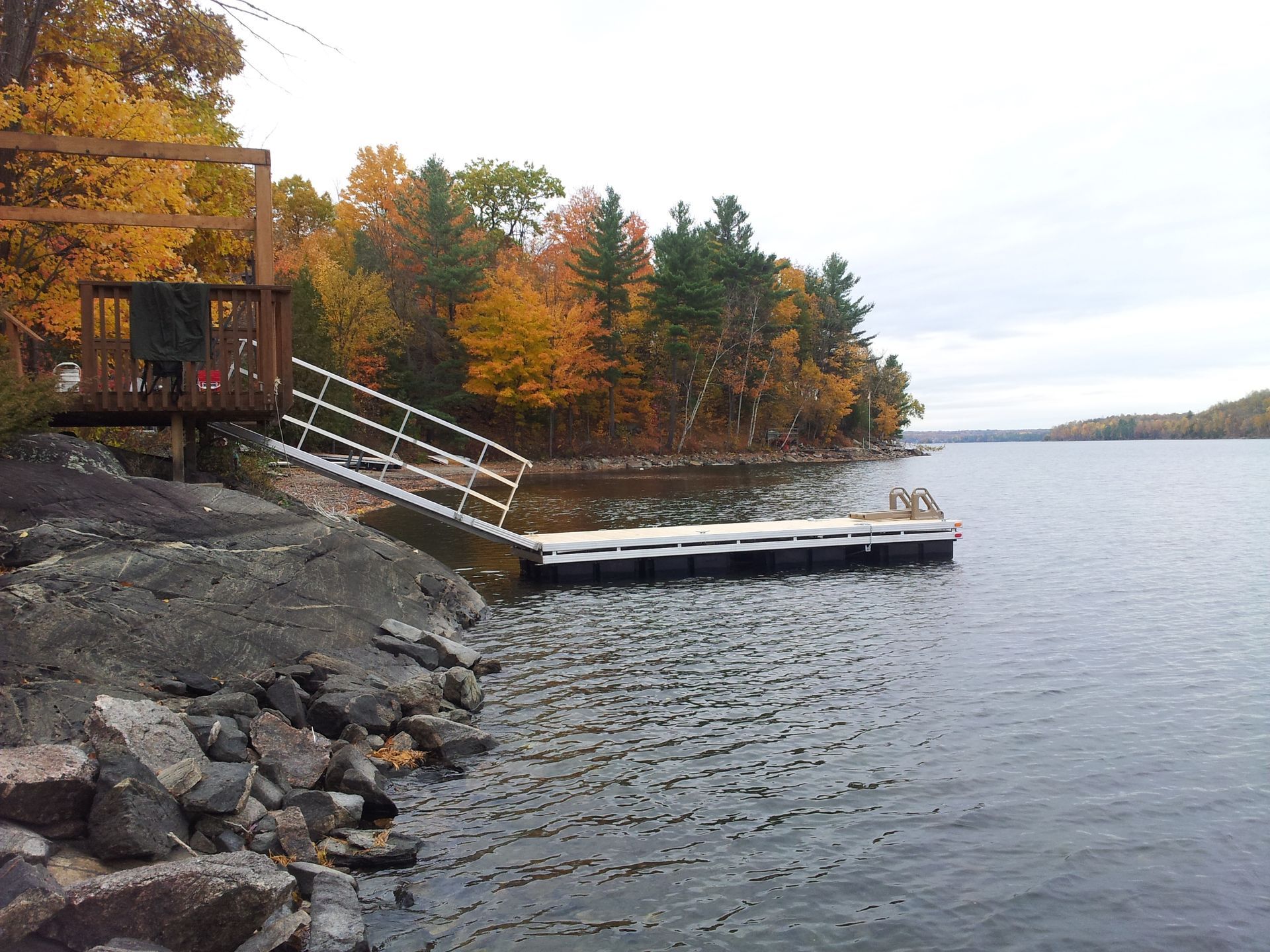
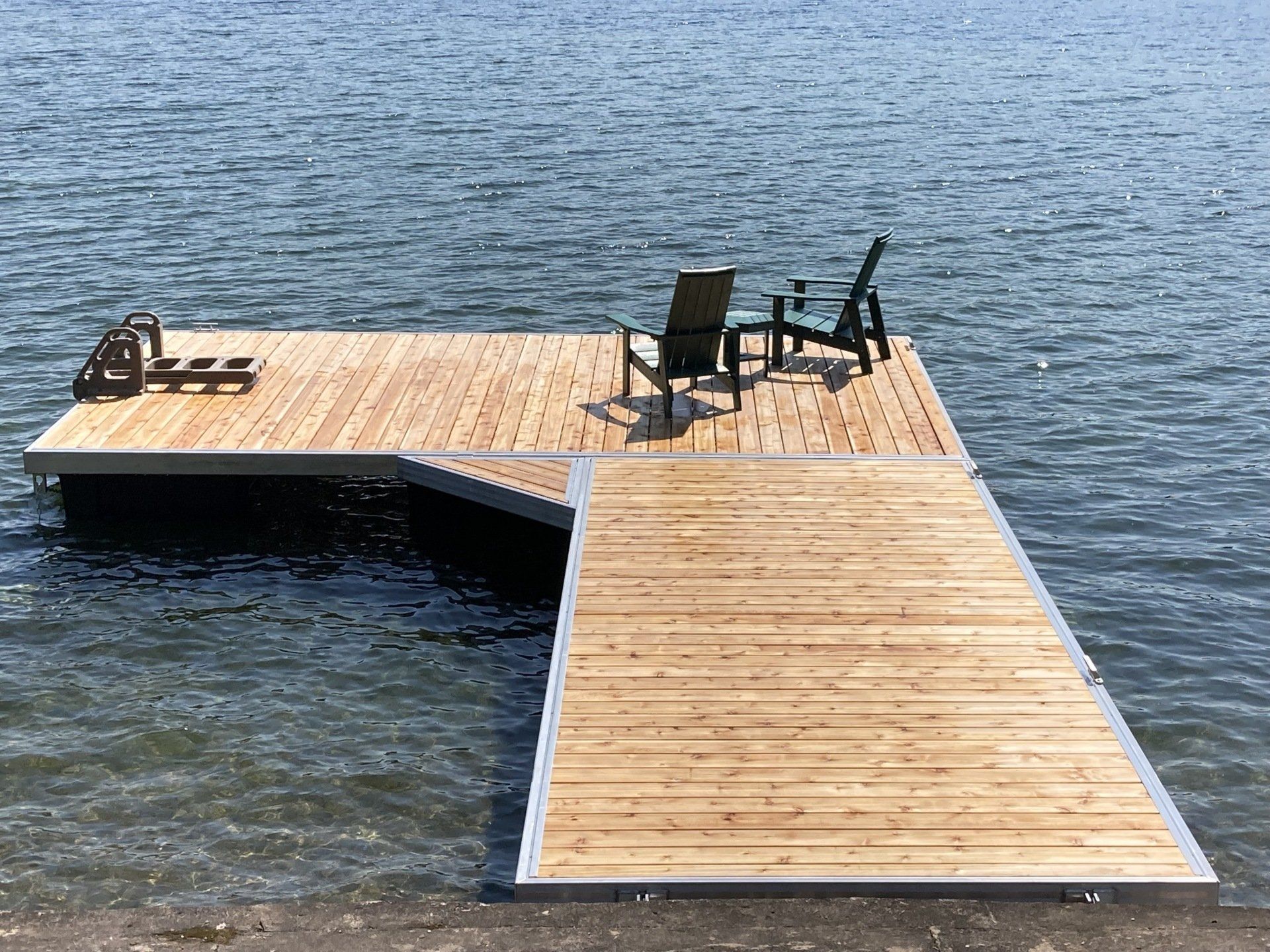
Floating docks are one of the most common systems used on residential lakes. They sit on the water’s surface and are supported by buoyant materials, allowing them to rise and fall with changing water levels.
This adaptability makes them well suited for:
Areas with fluctuating water levels
Deeper water where fixed supports are less practical
Shorelines that require flexibility over time
Floating systems are typically anchored rather than fixed in place, which allows them to move slightly with wind and water while maintaining position.
Their ability to adjust naturally makes them a reliable option in environments where conditions change throughout the season.
In regions connected to managed systems like the Rideau Canal waterway, where water levels can vary, floating docks are often used to maintain consistent usability.
Pipe Docks (Post Docks)
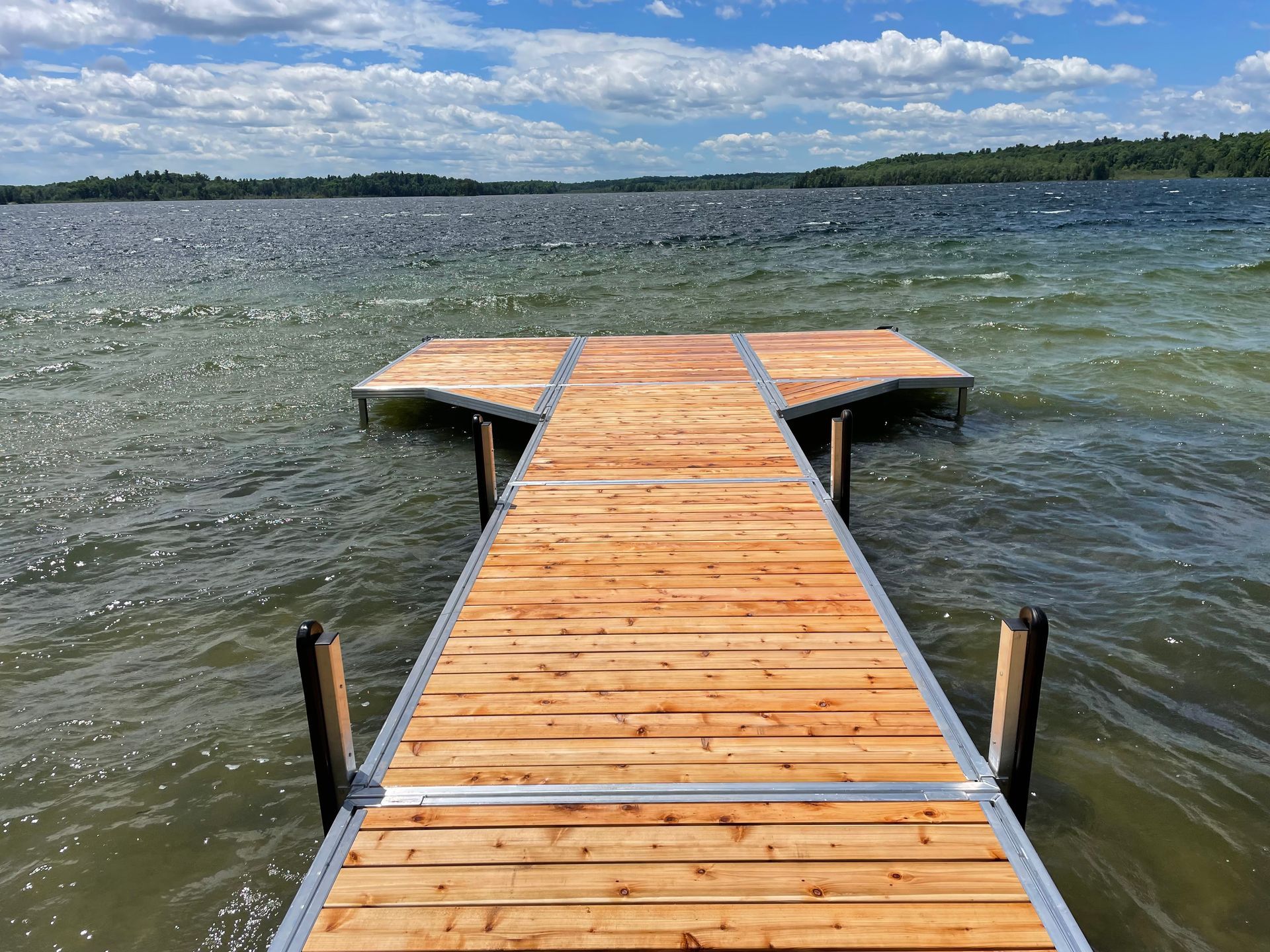
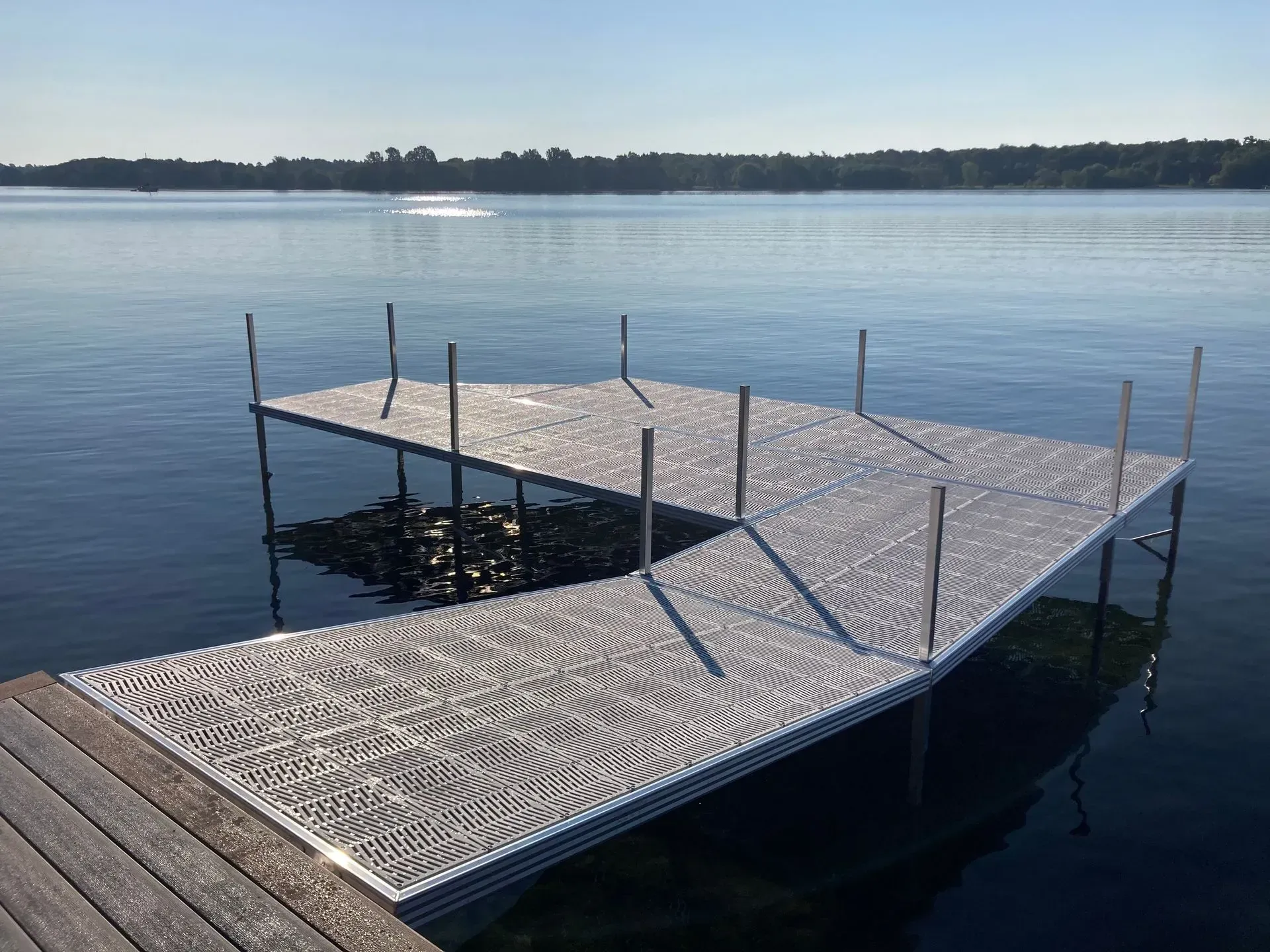
Pipe docks, sometimes referred to as post docks, are supported by adjustable legs that rest on the lakebed. These systems are commonly used in shallower water where stable footing can be established.
They are typically chosen for:
- Gradual shoreline slopes
- Firm lakebeds that allow for stable placement
- Seasonal installation and removal
Because they are not floating, pipe docks remain fixed at a set height. This can provide a more stable walking surface under normal conditions.
However, they require adjustment if water levels change significantly and are generally removed before winter to avoid damage from ice.
Selecting the right dock type often comes down to matching the system to the property, which is a key part of dock system selection and installation planning.
Crib Docks
Crib docks are a more permanent structure, typically built using wooden or steel frames filled with rock to create a solid base. These docks sit directly on the lakebed and are designed for long-term use.
They are most often found in:
Locations with consistent water depth
Shorelines that support permanent structures
Situations where a fixed, heavy-duty solution is required
Because of their construction, crib docks are highly stable and resistant to movement during the boating season. However, they are less adaptable to changing water levels and can be more complex to install.
Permanent structures like these are often subject to additional environmental considerations, particularly in regulated waterways and protected areas.
Fisheries and Oceans Canada provides guidance on how shoreline structures can affect aquatic environments and habitat conditions.
Fixed Docks
Fixed docks are supported by piles or posts driven into the lakebed. Unlike pipe docks, they are designed to remain in place year-round and are built to withstand environmental forces.
These systems are typically used in:
Areas with consistent water depth
Shorelines that allow for permanent installation
Locations where long-term durability is a priority
Because they are anchored into the lakebed, fixed docks offer strong structural stability. However, like crib docks, they do not adjust to changing water levels and must be designed with those conditions in mind from the start.
Their performance depends heavily on proper installation and alignment with site conditions, which is why planning plays a critical role in long-term reliability.
This is often explored further through dock planning insights and project considerations, where installation choices directly impact performance over time.
Modular Dock Systems
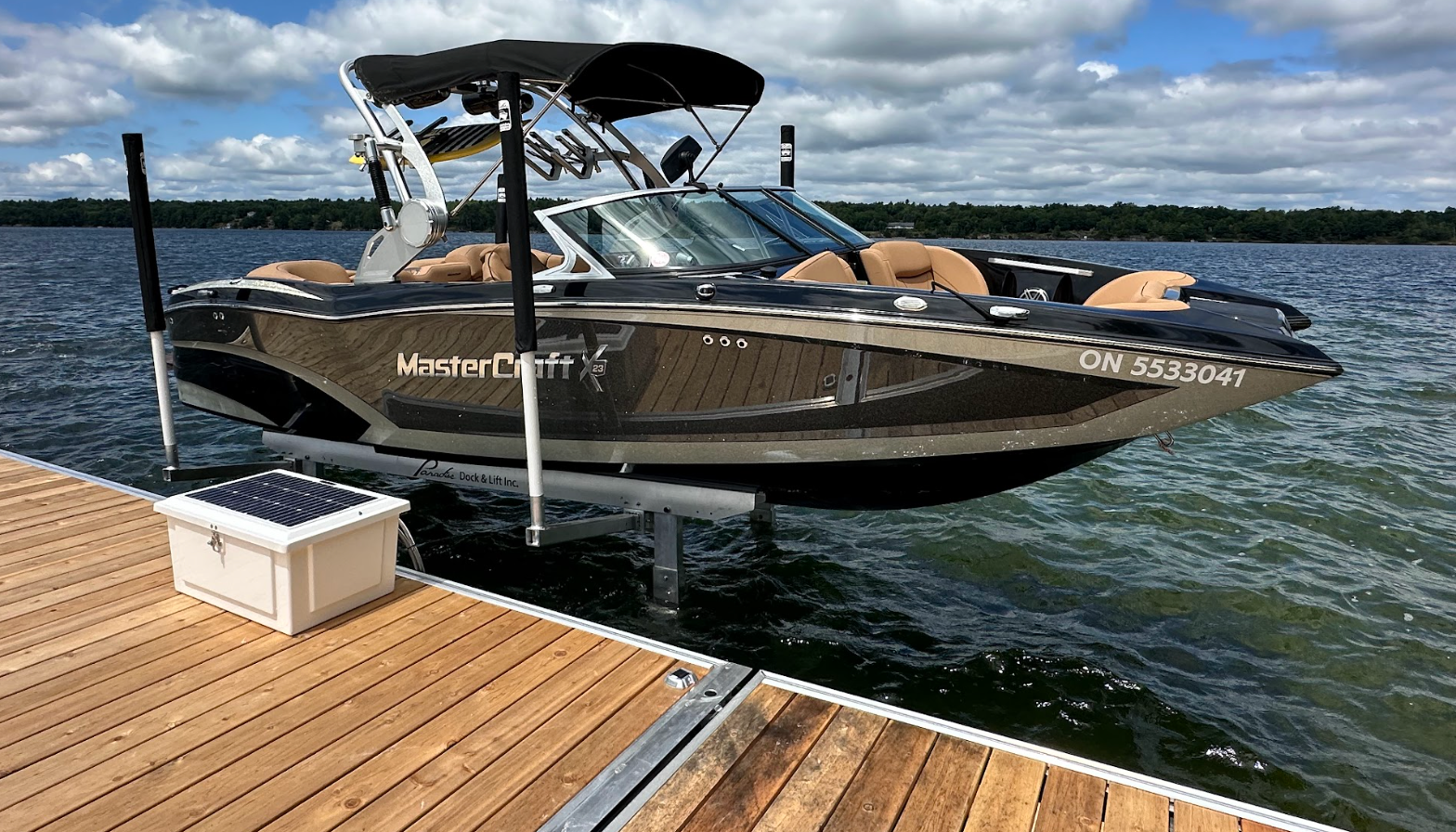
Modular docks are a flexible option that can be configured in various layouts using pre-engineered sections. Many floating dock systems fall into this category, offering both adaptability and ease of expansion.
They are commonly used for:
Custom layouts that may change over time
Properties that require phased installation
Situations where access, storage, or reconfiguration is important
Modular systems allow property owners to adjust their dock as needs evolve, whether that involves extending the structure or reworking the layout.
Their versatility makes them a practical choice for a wide range of residential applications.
The Canadian Standards Association outlines the importance of designing structures to handle environmental loads, which applies directly to modular systems that must perform under varying conditions.
Choosing the Right Dock for Your Property
There is no single dock type that works for every shoreline. The right choice depends on how the system interacts with the surrounding environment.
Key factors include:
- Water depth and fluctuation
- Shoreline slope and composition
- Exposure to wind and ice movement
- Intended use and layout requirements
A dock that performs well in one location may not perform the same way in another. Matching the system to the property is what determines long-term success.
For a broader overview of available systems and considerations,
residential dock solutions and waterfront systems are typically evaluated based on site-specific conditions.
What This Comes Down To
Each dock type has its place.
Floating systems offer flexibility. Pipe docks provide seasonal simplicity. Fixed and crib docks deliver long-term stability. Modular systems allow for adaptability.
The difference isn’t which one is “best.” It’s which one is best suited to the environment it’s being placed in.
When the right system is chosen and installed properly, the result is a dock that performs consistently, adapts to conditions, and holds up over time.